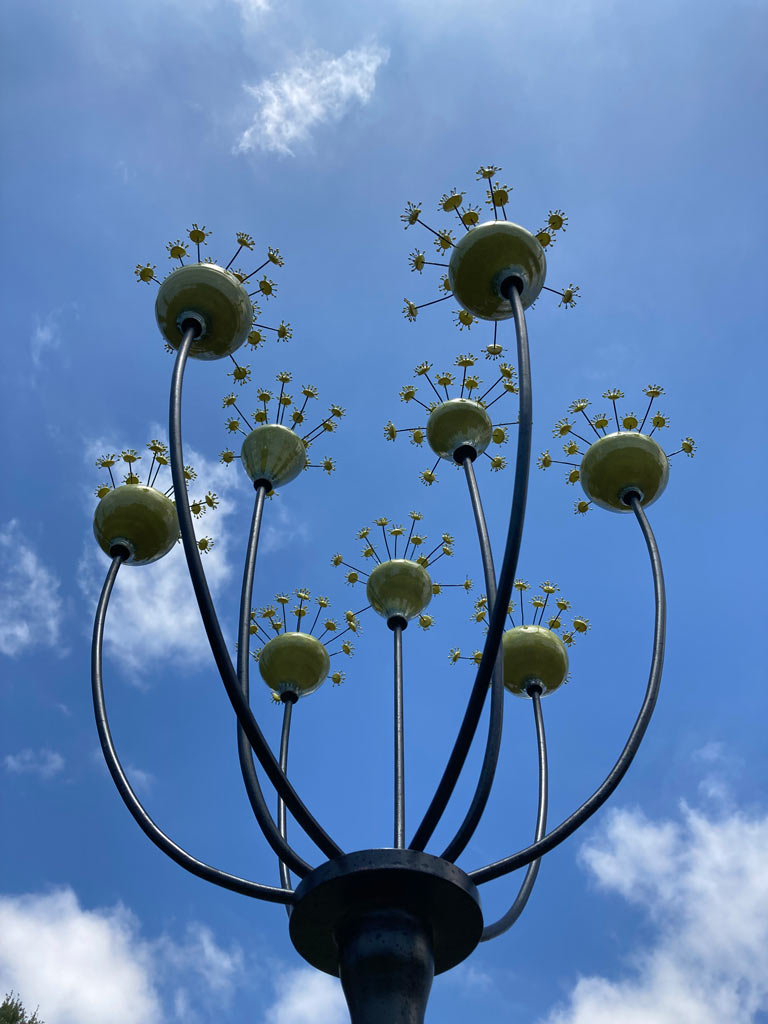
Be sure to get out to Sierra Azul Gardens before October 31st to check out all the sculptures. There are over 90 works created by 48 artists and collaborators. Visit the stunning two-acre demonstration garden, relax under the umbrellas, and spend an afternoon enjoying the exhibit.
To everyone who came out to Open Studios this year and a special thank you if you added new work to your collection! It was great to re-connect with old friends and make new connections. Feeling the love everyone!!
If you’re still thinking about a piece that you didn’t take home, I’ll be adding new work to the online shop soon, and of course you’re always welcome to swing by the studio to shop in person!
Nearly the entire exhibit is up in the online shop and open 24/7. If you’re not in the area and won’t get up to see the show in person, this is a great way to tour the exhibit and add a new piece to your collection. Works range from small handheld objects to site specific large scale installations as well as photos from the In the Field series so there’s something for everyone.
Whew! Nearly 600 people walked through my studio last weekend and y’all nearly wore me out! Big thank yous to everyone who came out and especially big thank yous to those of you that bought art! I’ve spent this week, resting and recovering as we gear up for Encore weekend October 15th & 16th!
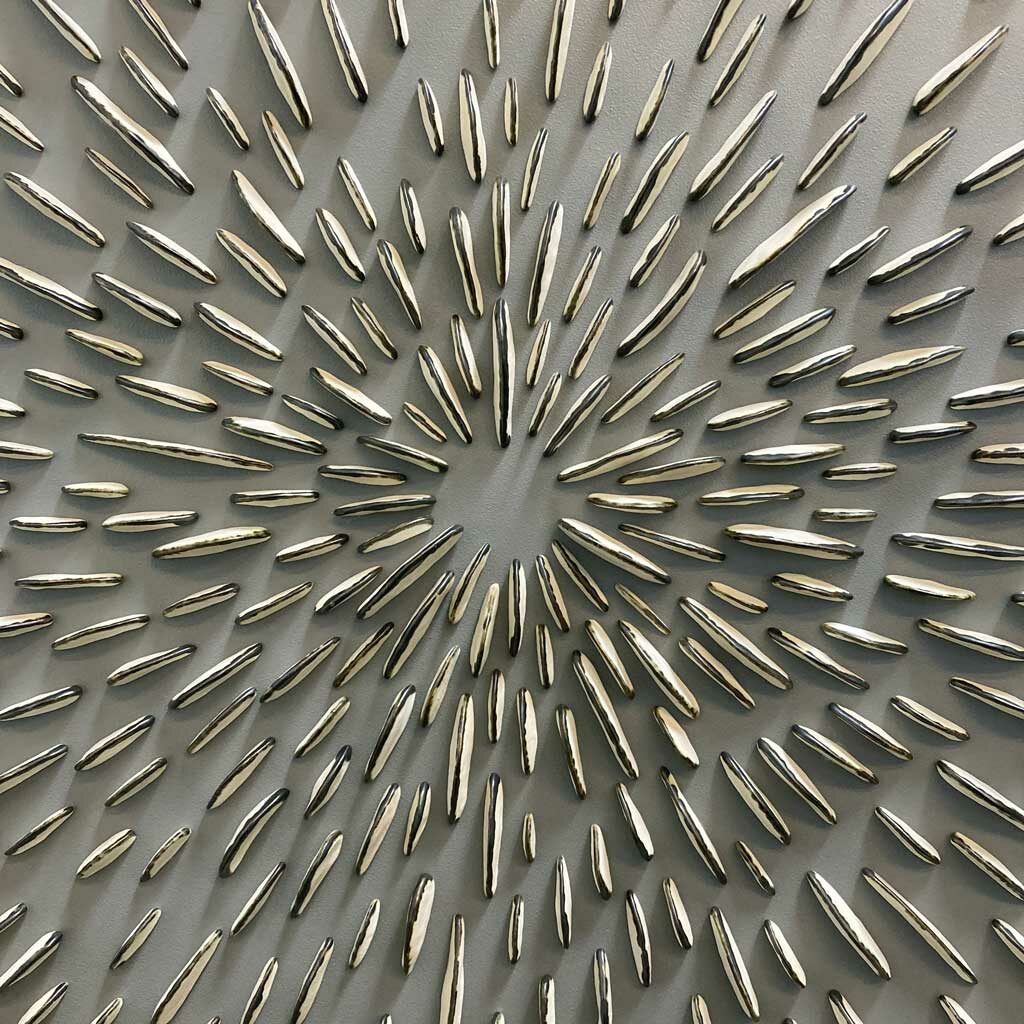
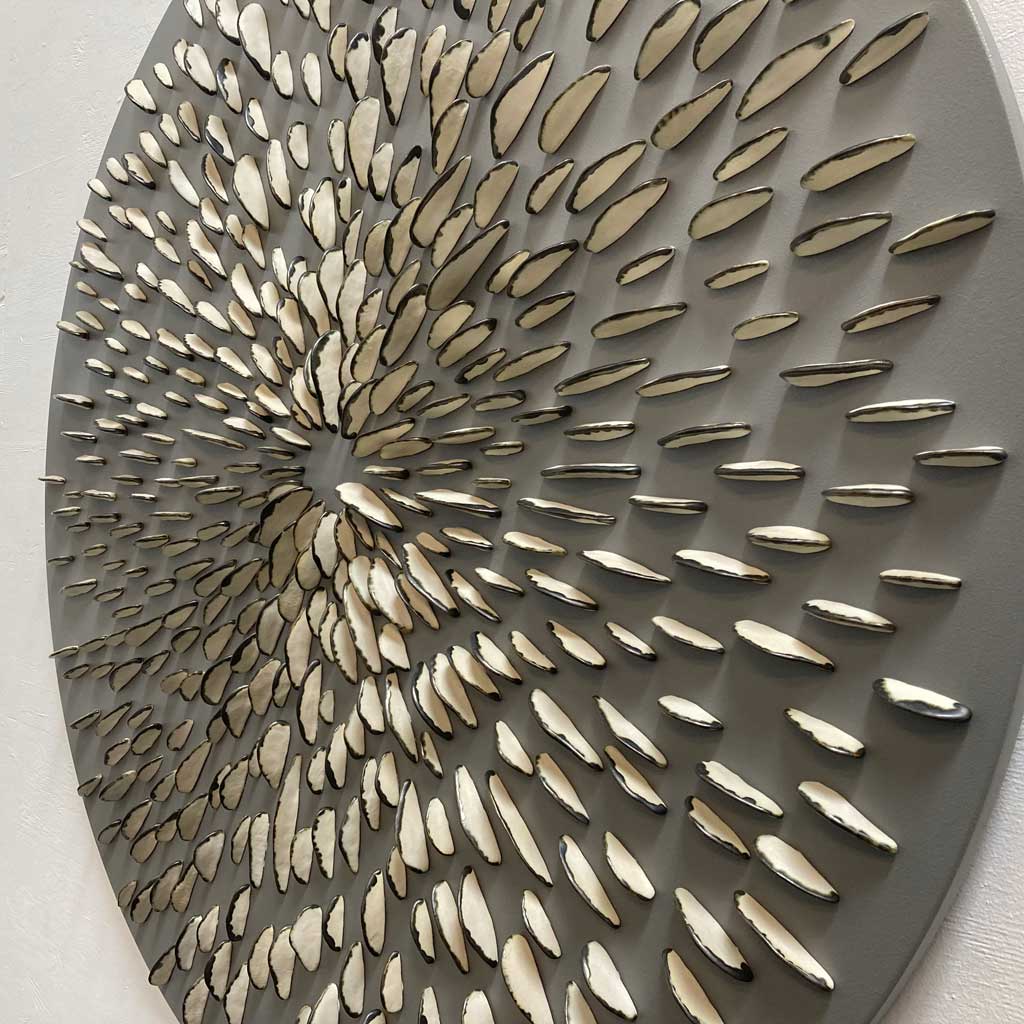
spore patterns wall installation | ceramic on wood base| 48″ x 48″ x 4″ | 4500.
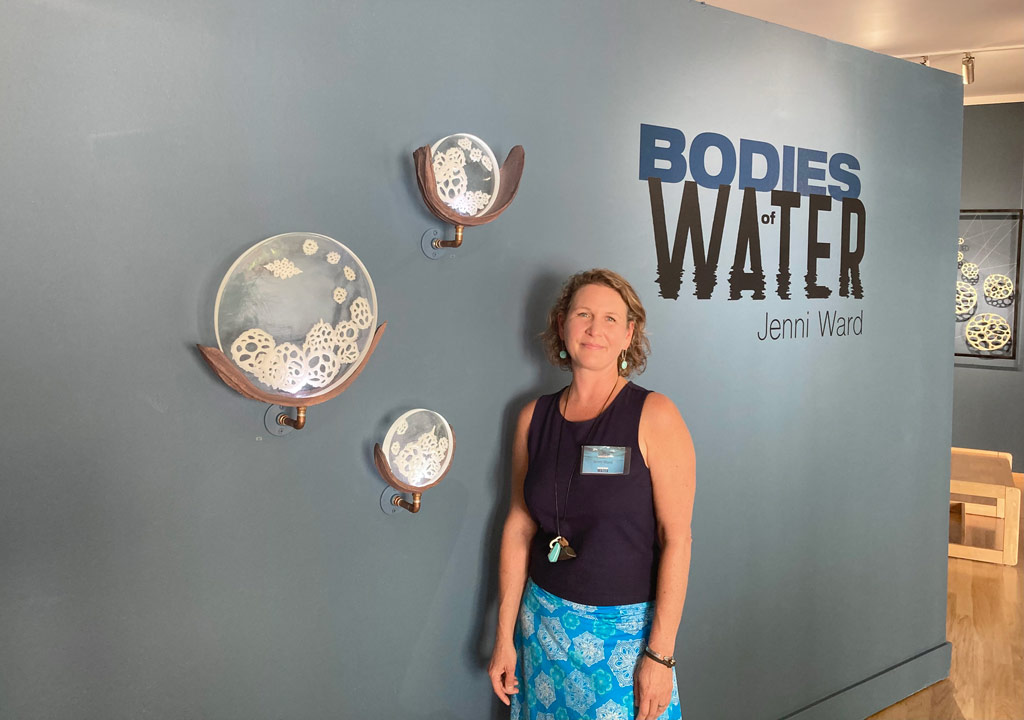
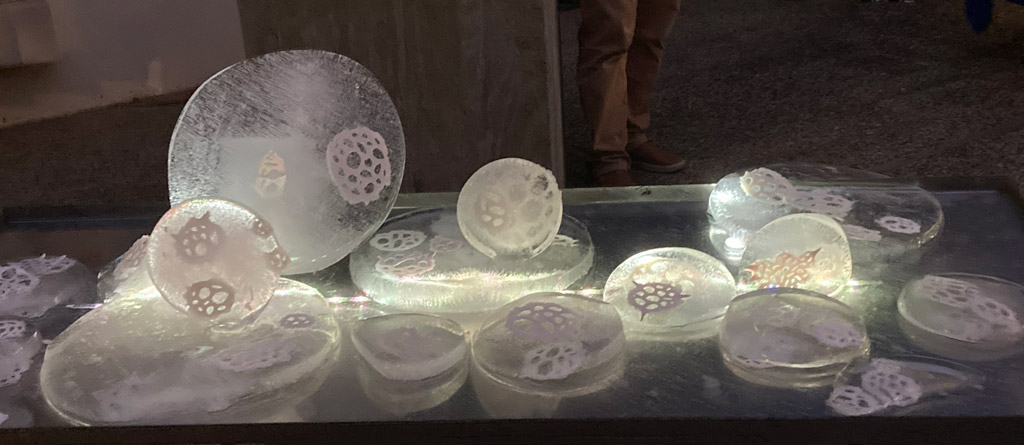
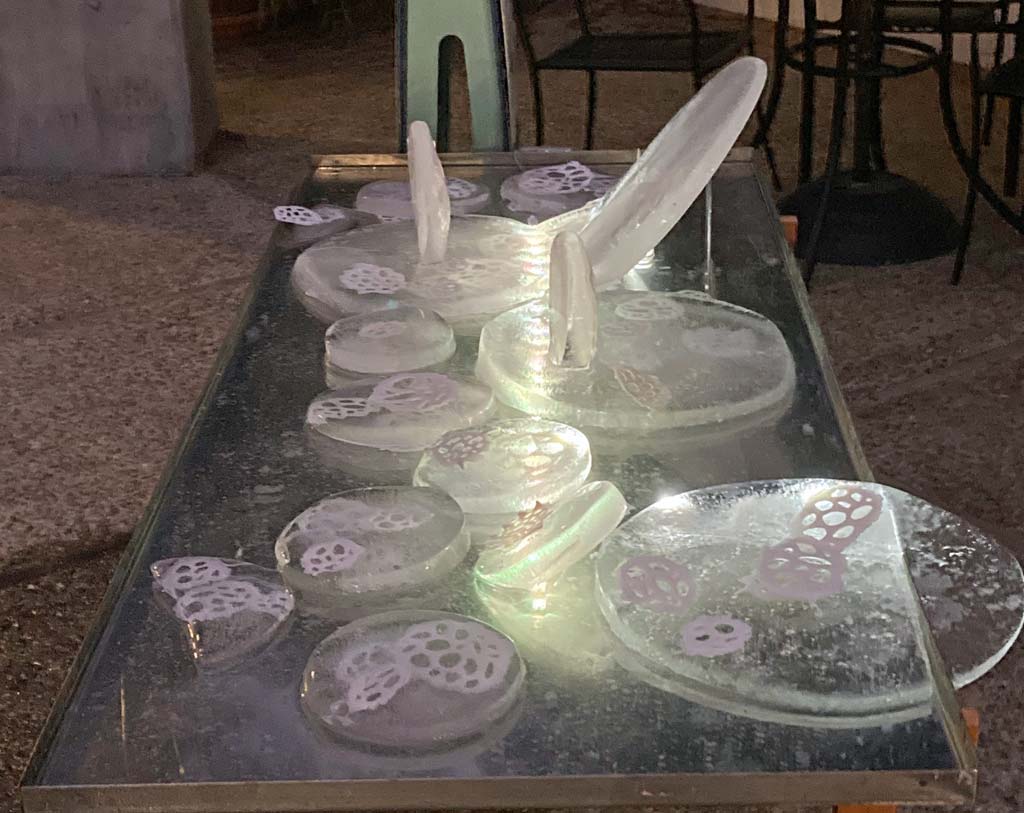
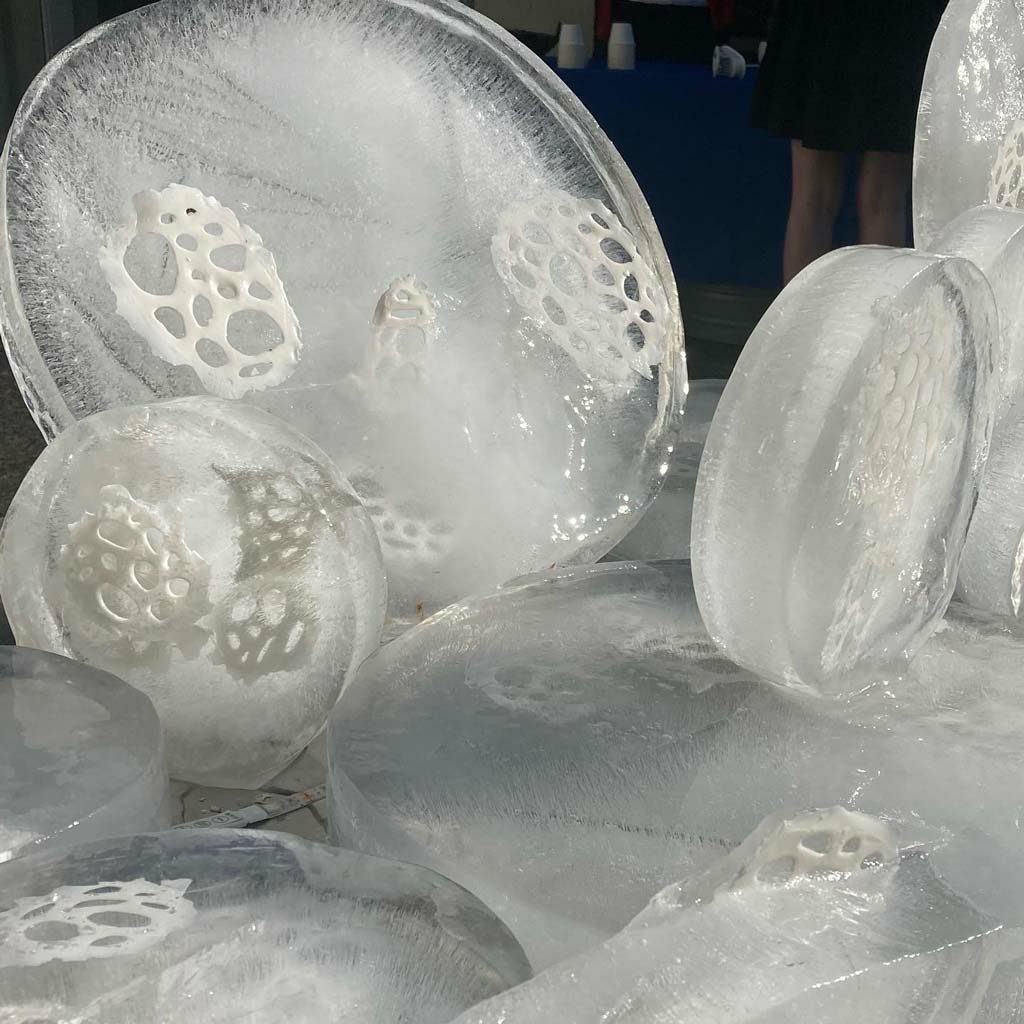
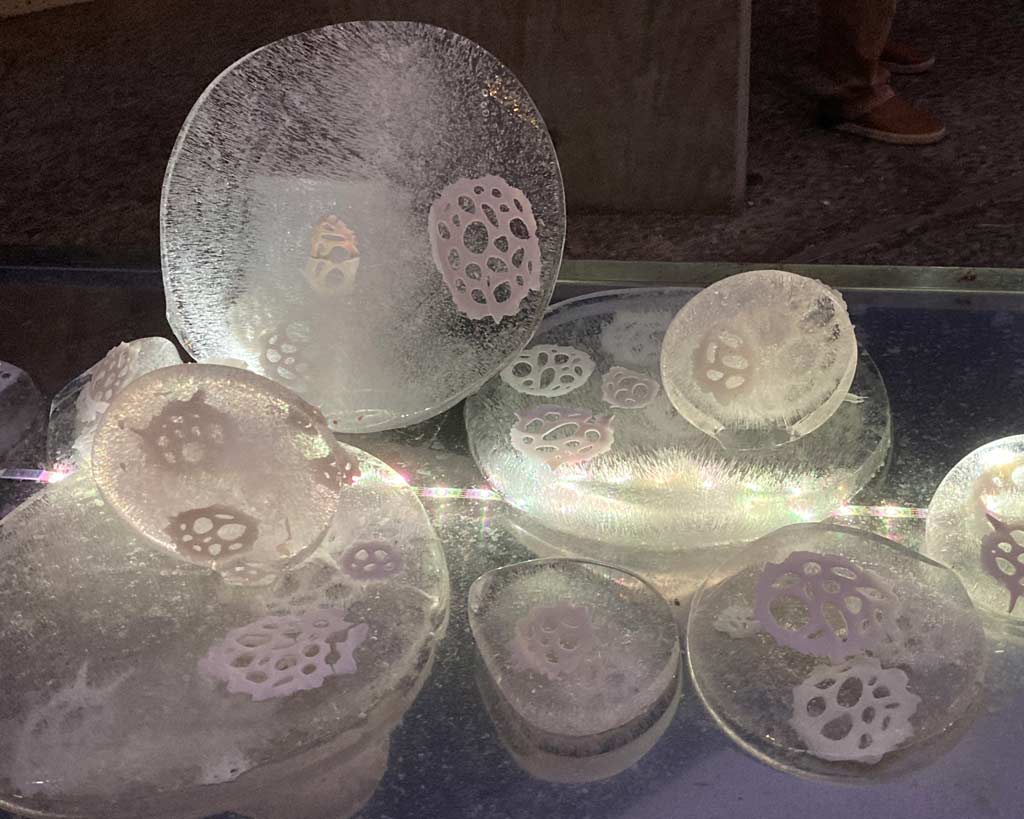
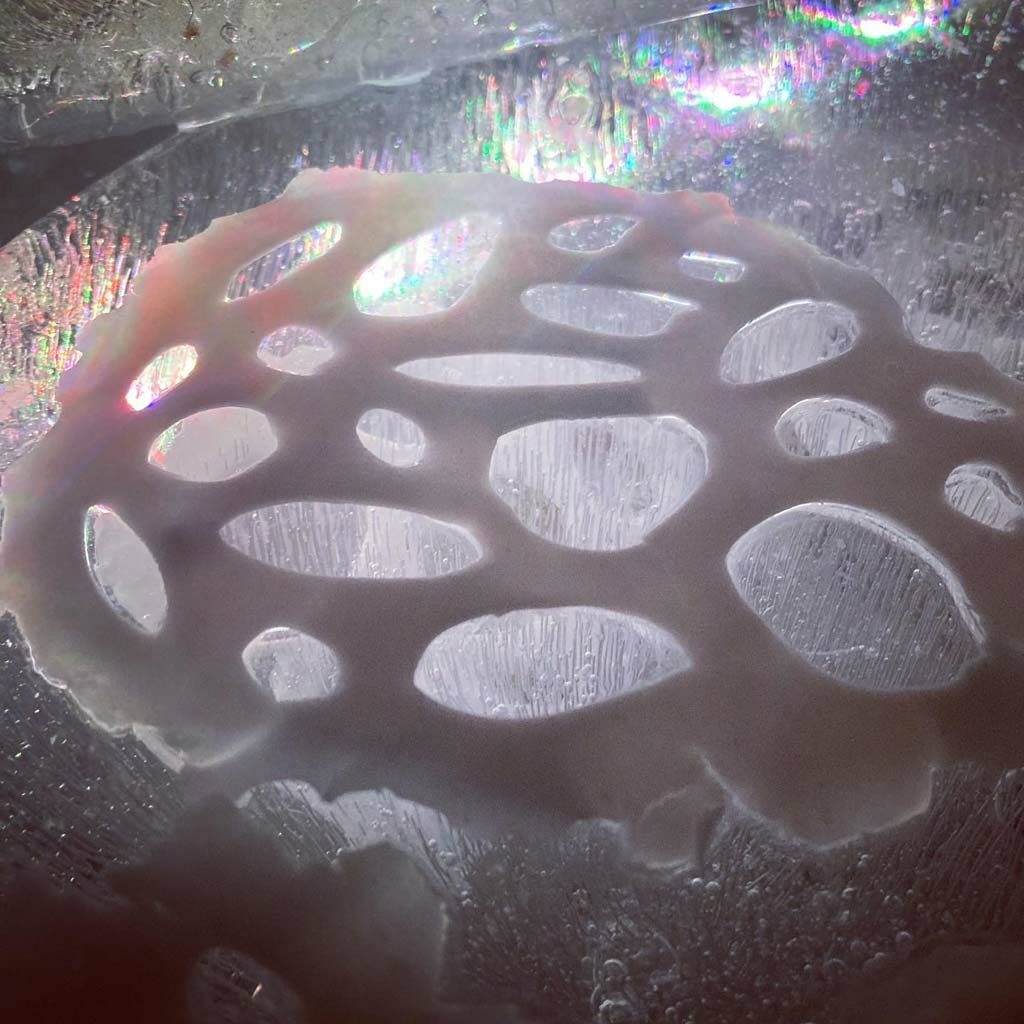
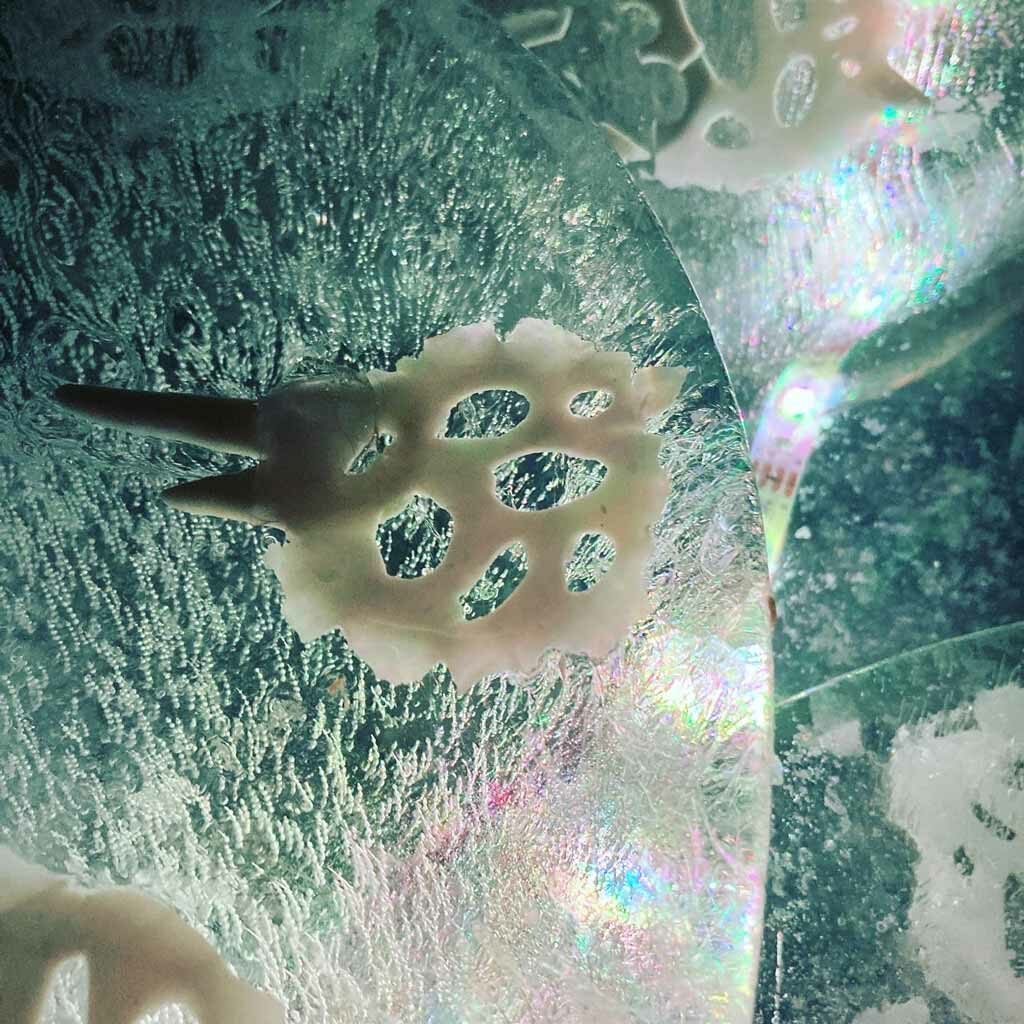
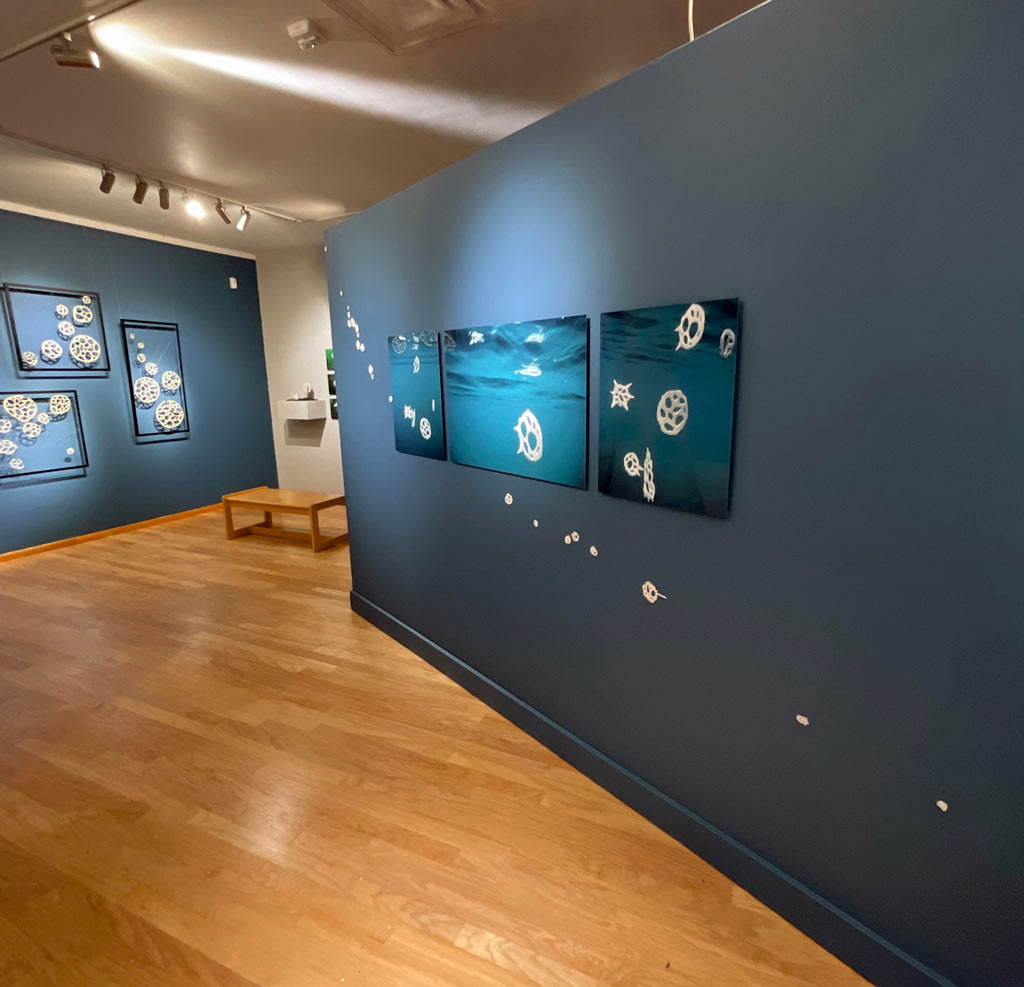
Thank you to everyone who came up to see the opening of Bodies of Water at the Eloise Pickard Smith Gallery- it was a lovely evening celebrating a collaboration of art + science. If you missed the opening, I wanted to share images of the ephemeral ice sculpture that was on display in the courtyard.
Throughout the course of the evening, discs of ice with porcelain plankton parts embedded in them calved, crashed, slipped and dripped as the installation melted away. A blatant commentary on the loss of sea ice, rising ocean temperatures and how we are all contributing to it. Accompanying the ice sculpture were words by Ari Friedlaender, PhD who has seen climate change happening in front of his eyes over multiple trips to Antartica. Inside the gallery, three pieces made with resin mimicked the ephemeral ice sculpture melting outside.
Our planet is warming, quickly. Some regions like those at the poles are extremely susceptible to warming. In both the Arctic and Antarctic, nearly every level of the marine ecosystem has evolved to rely on the annual advance and retreat of sea ice. The intimate ties between sea ice and the health of our oceans are being stretched thin by rapid warming and diminishing amounts of sea ice cover. From tiny bacteria and phytoplankton that rely on the sea ice for their growth and flourishing, to zooplankton like krill that feed on these under-ice communities, to the largest animals on the planet the baleen whales that feed on these zooplankton, they are all at risk. Scientists and the general public can see these changes occur from satellite images, documentary films, scientific reports, and first-hand accounts.
Over the past 25 years I have made nearly 50 trips to the Antarctic Peninsula, the knife-edge of the continent that sits below South America and juts into the Southern Ocean. Here, temperatures are warming as fast as nearly anywhere on the planet, and the amount of sea ice that builds annually is decreasing. Because of this, the amount of krill that is available for penguins, seals, seabirds, fish, and whales is decreasing too. Above the water, I have watched as glaciers curl up like a hermit crab into its shell, I have watched glossy snow-covered peaks weep away their cover becoming dark, rocky outcroppings, and I have watched as the surface of the ocean that should be frozen solid remains liquid and wavy.
Opportunities to share these stories and bring together people from diverse communities with different ways of thinking and seeing the world is critical if we are to find a way to solve these issues that we have, without a shadow of a doubt, created by our actions. Art and science are two powerful tools that we have to educate, bring empathy, share truth, and inspire change. I am honored to be part of this effort with Jenni and Tauna and all of these here at UCSC.
Ari S. Friedlaender, PhD
Professor, Ocean Sciences Department
It was the first time I’d used ice as a medium and as simple as it seems to make ice, there was actually a very steep learning curve. I had to make the ice as clear as possible, I wanted to suspend the ceramic pieces in it at different layers and I wanted to display them in a way that worked with the exhibit as a whole.
I honestly didn’t advertise that I was planning this for the opening because I really wasn’t sure if it would work or if it would be interesting or if it would melt before anyone even got there. The lighting added another element that helped highlight the the porcelain plankton and the natural bubble patterns in the ice. By the end of the night, very little of the ice remained. And while it didn’t turn out exactly like my plan, it was beautiful and interesting and I think it has a lot of potential for future projects.
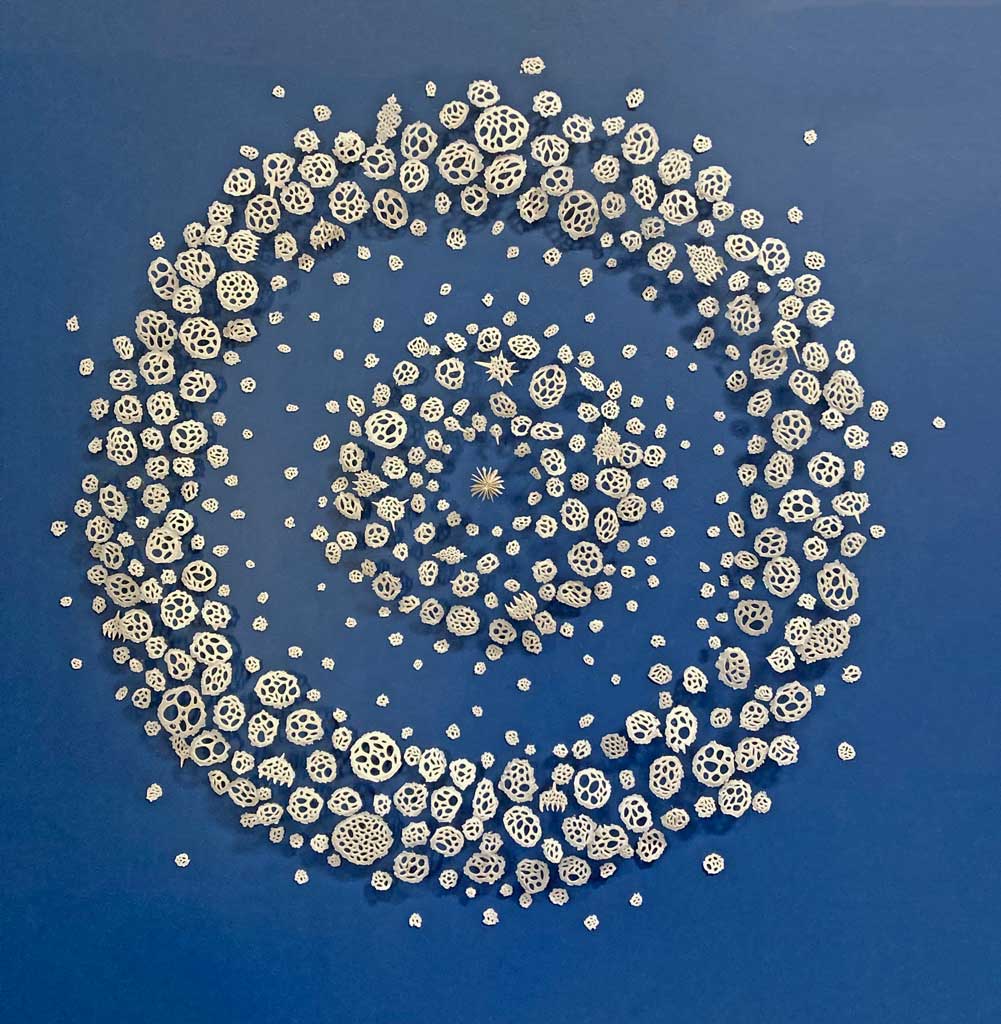
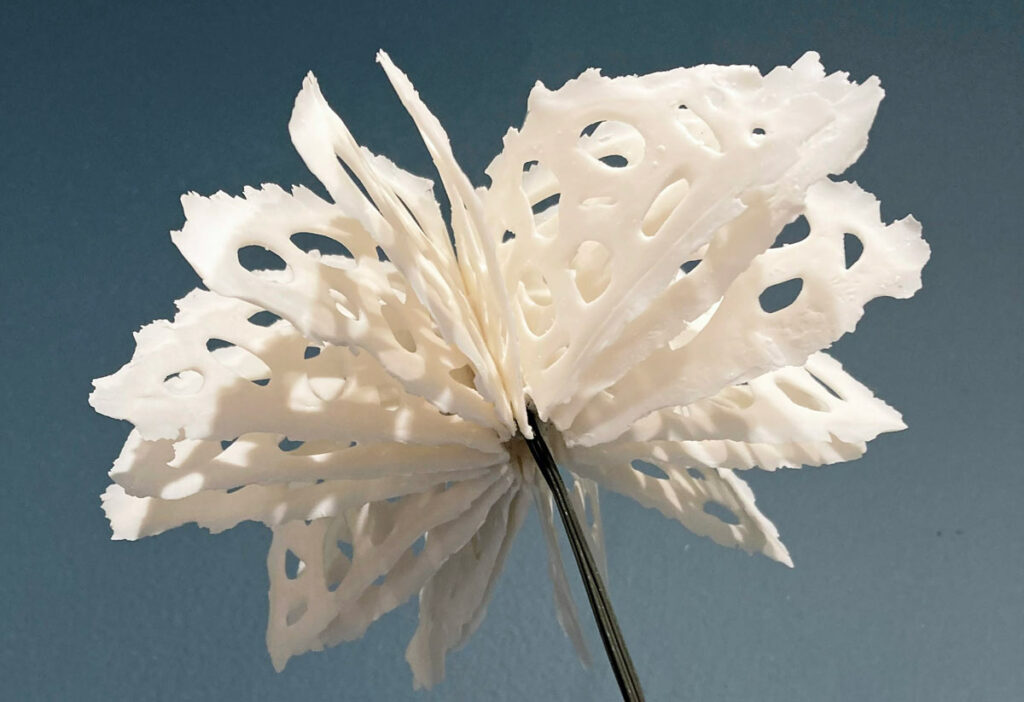
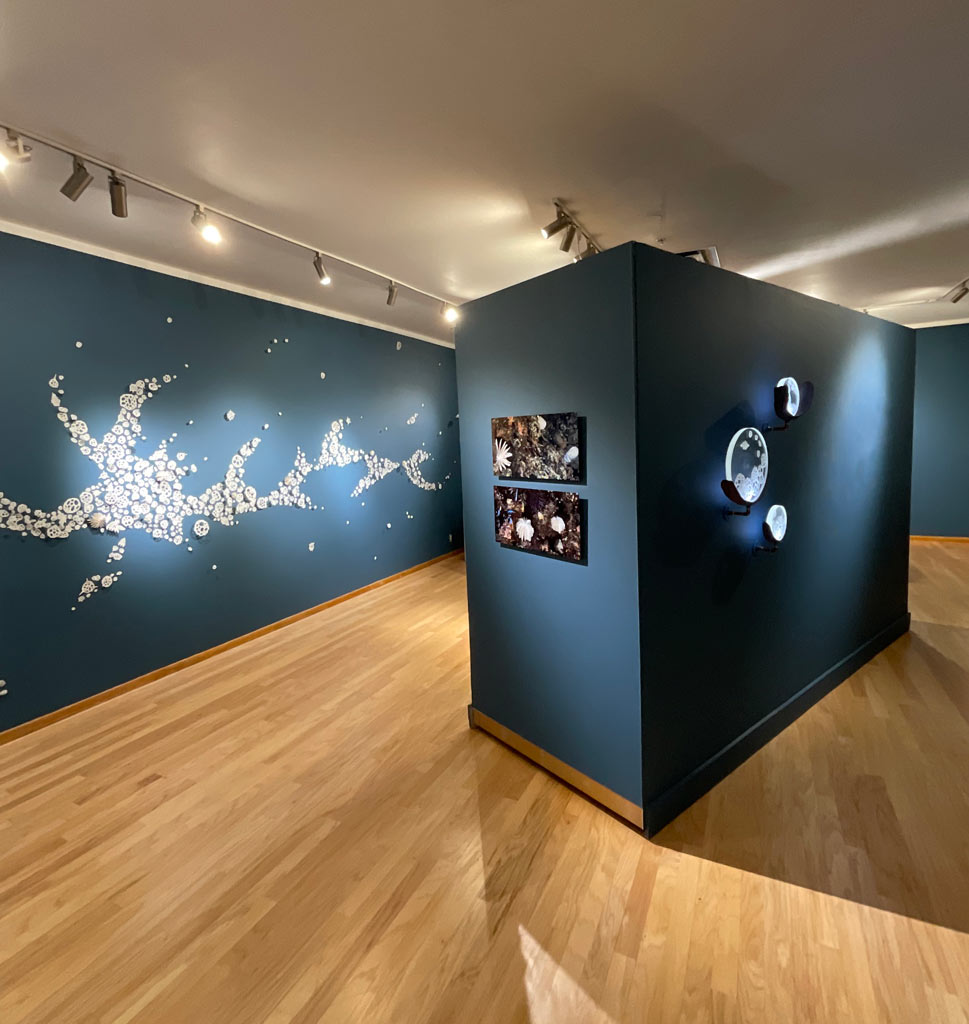
Beginning with a projected image on the wall, gives a starting place for the installation to launch from. The layout is based on satellite imagery of a plankton bloom happening in the Southern Ocean, near McMurdo Sound in Antartica. Ceramic pieces inspired by the skeletal structures of plankton were added to the wall giving it shape and dimension. Once the main form was installed the rest was done intuitively, adding one piece at a time and then stepping back to see it’s impact on the overall form. This piece is 30′ long by 8′ high and was installed over several days.