
For almost a decade, I have been inspired by microscopic plankton, how can this tiny little organism be the source of so much inspiration for my work you ask. Let’s start with the obvious. They. Are. Gorgeous. Check out these images I took looking at a slide through my microscope…
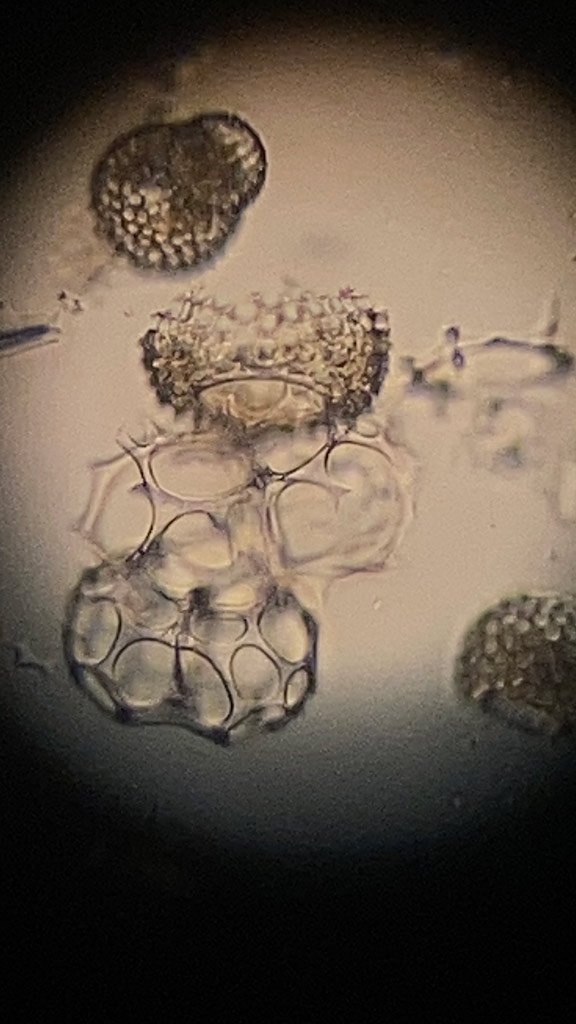
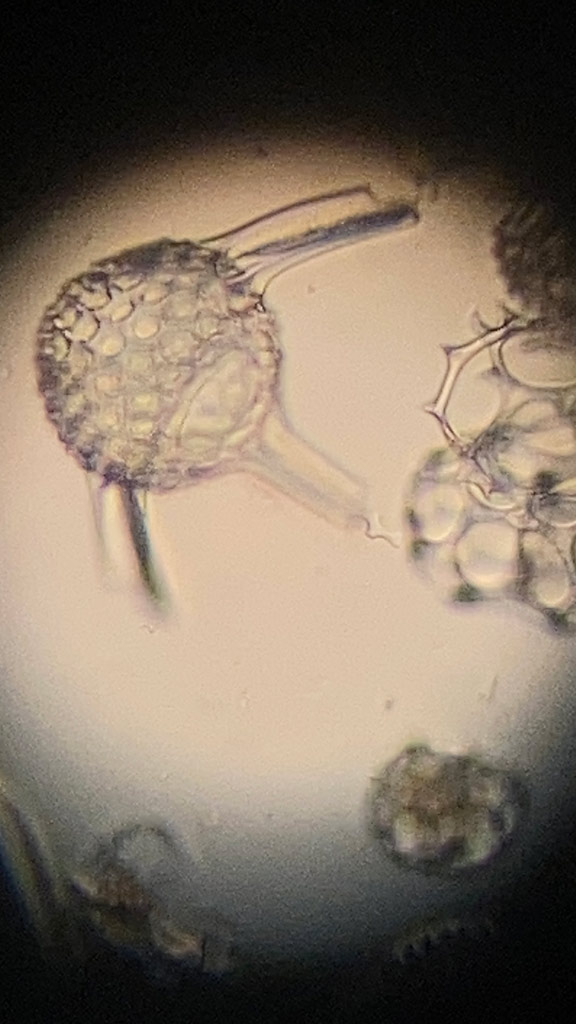
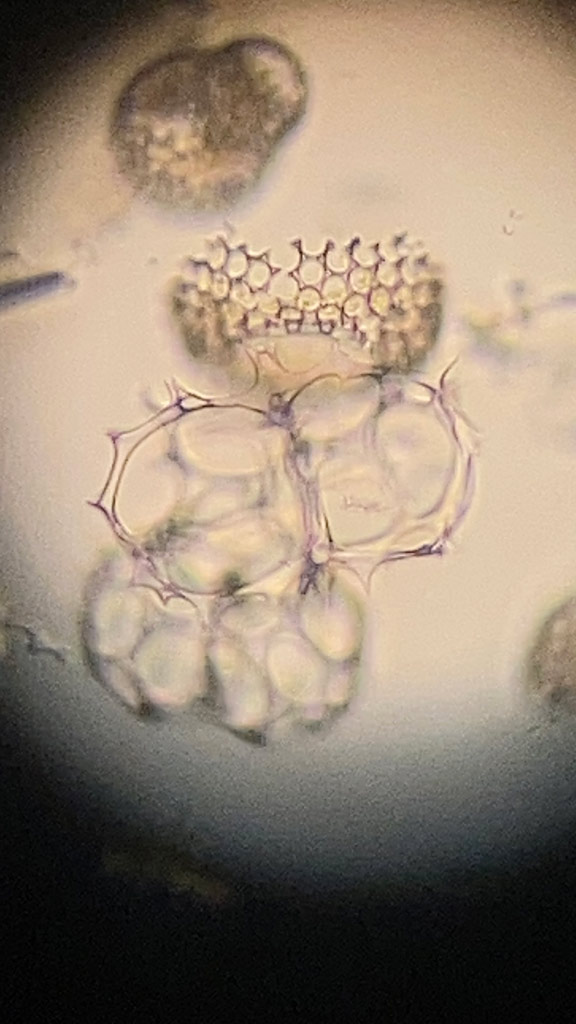
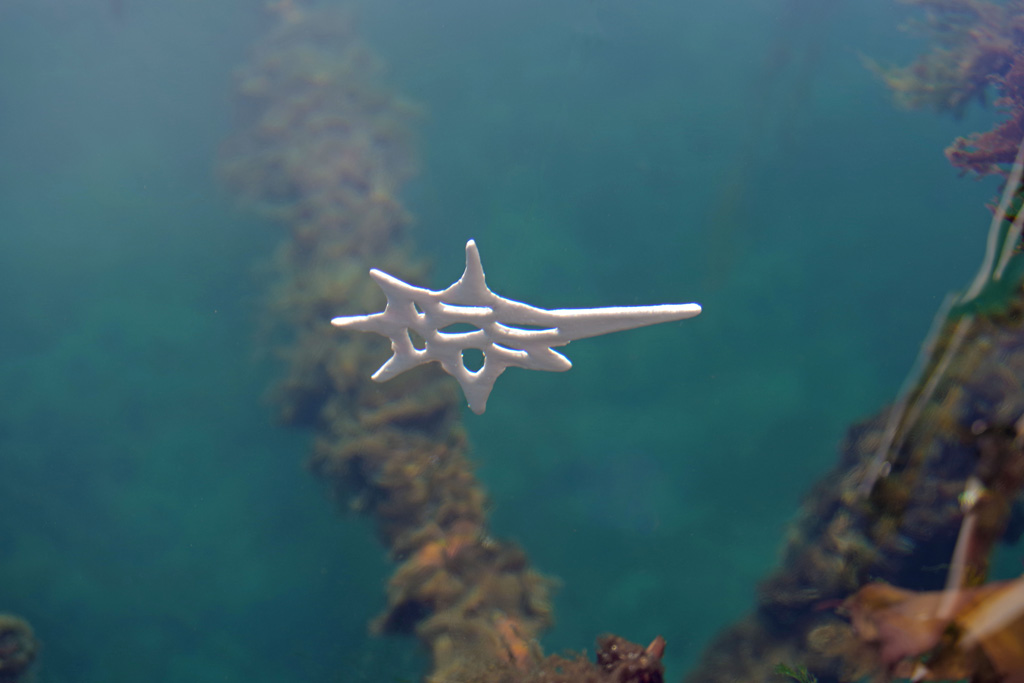
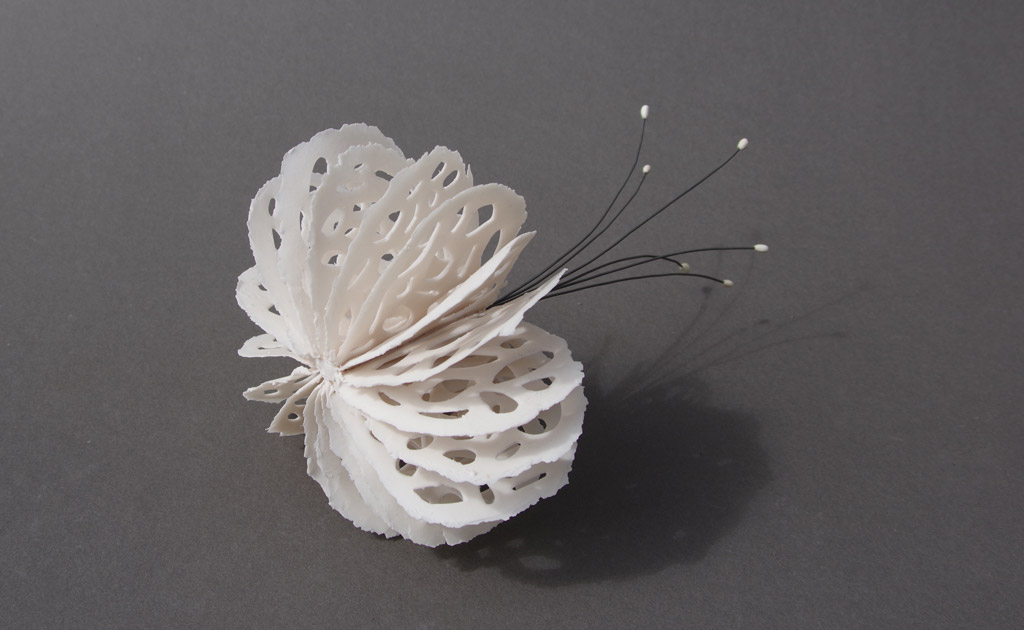
The particular type of plankton I’m looking at are radiolarians, they are single cell organisms, most are tiny but some are visible to the naked eye. They have intricate skeletal structures formed by silica which is what you’re seeing in the microscopic images. Imagine being a single cell and yet so complex in structure?! They fall into the category of being both phytoplankton and zooplankton, sometimes jokingly referred to as vegimals. Their fossil record dates back over 500 million years and have been found even in the Himalayas. Their forms have inspired me to create my versions of their skeletal structures using porcelain clay.
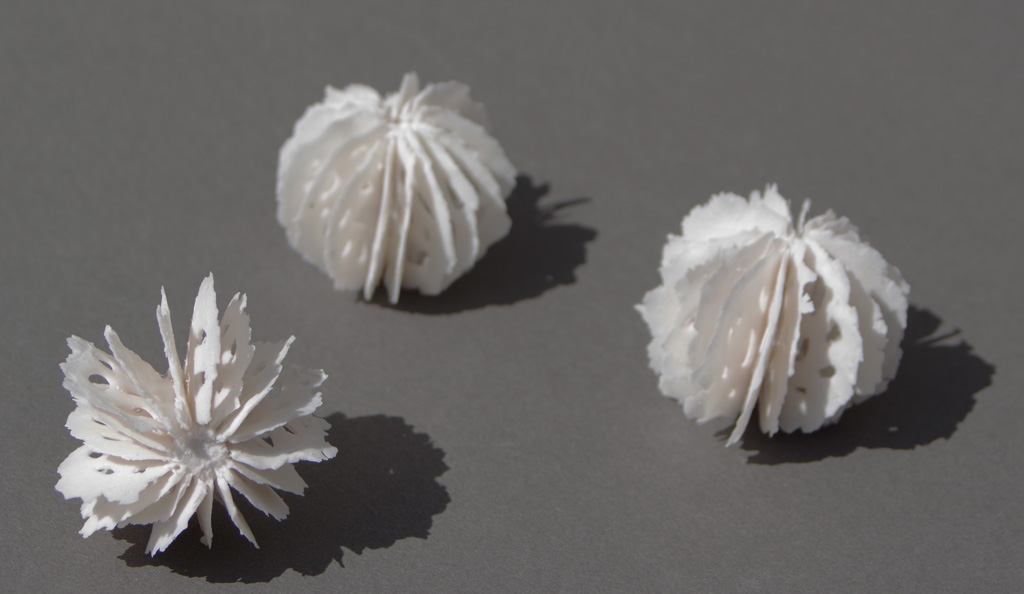
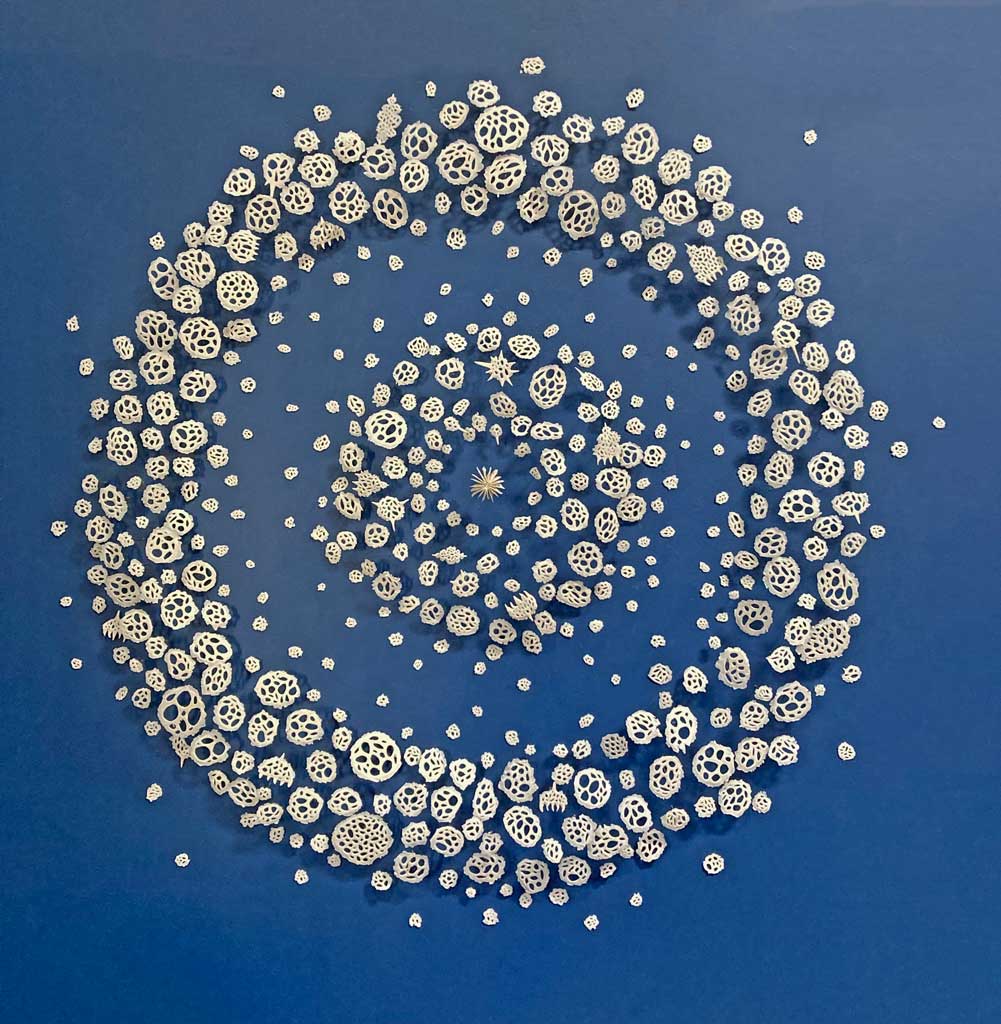
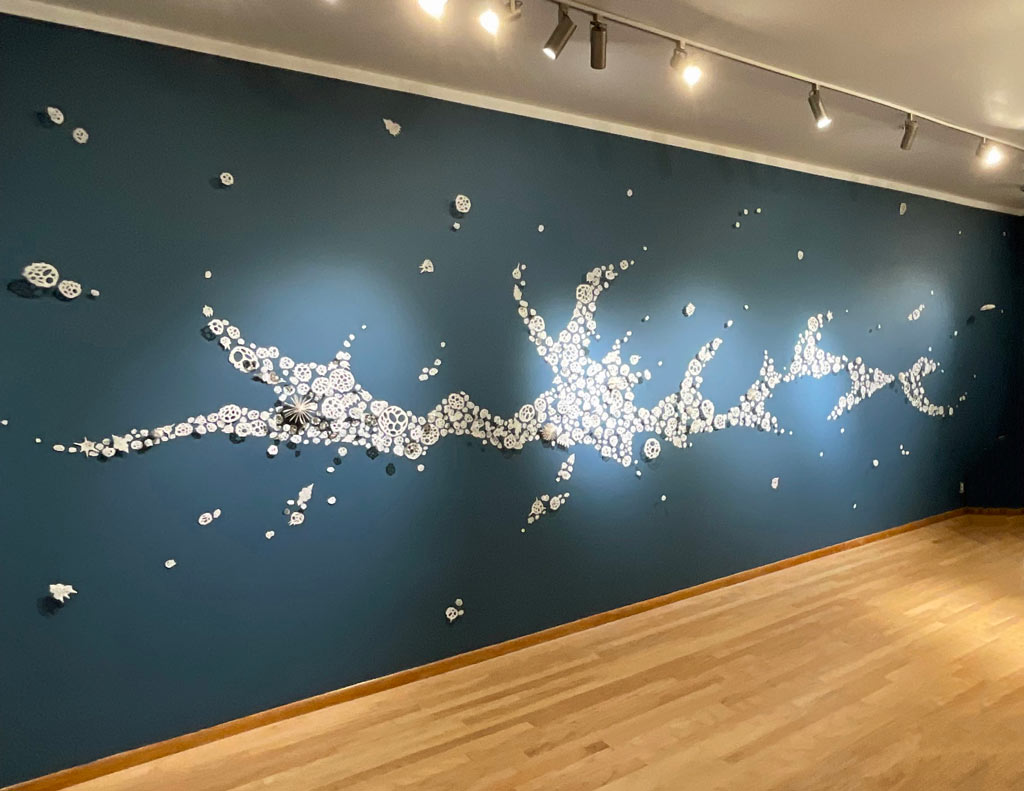
Plankton are marine drifters and range in size from microscopic to large jellyfish, they are in all waters across the planet. Some are bioluminescent, some are only considered plankton in their larval stage and then change taxonomy and they can also cause harmful algae blooms(HABs), commonly referred to as a red tide. Algae blooms are often so large that they can be spotted by satellites in space. The color of the bloom depends on the type of plankton that is blooming and the form is based on the tides, currents and wind. I created this installation based on the shape of an algae bloom off the coast of Antartica that was captured by a NASA satellite image.
The fact that we cannot survive on this planet without plankton and that we generally never think about them is mind-blowing to me. They are the base of the entire marine food-chain, produce more oxygen than all of the trees and trap carbon from the atmosphere locking it in the deep ocean. We use diatomaceous earth in our gardens and in our toothpastes, which are the fossilized remains of diatoms – another type of plankton. Plankton have helped us mitigate climate change and provide a viable planet for life.
So, why plankton? For me, nature is the best artist and the skeletal forms of radiolarians will never cease to amaze me. I love the idea that they are too small to see without a microscope but can also be seen from space when they bloom. And, their purpose in the systems of nature, seem to be a never-ending source of inspiration and ideas, even after almost ten years, I still have a million ideas of things to make and stories to tell with these forms. Are you inspired now too?