Here’s the monthly wrap up of everything going on at the studio…
Want to get the monthly email right in your inbox?
Join our safe subscribe monthly mailing list:
Here’s the monthly wrap up of everything going on at the studio…
Want to get the monthly email right in your inbox?
Join our safe subscribe monthly mailing list:
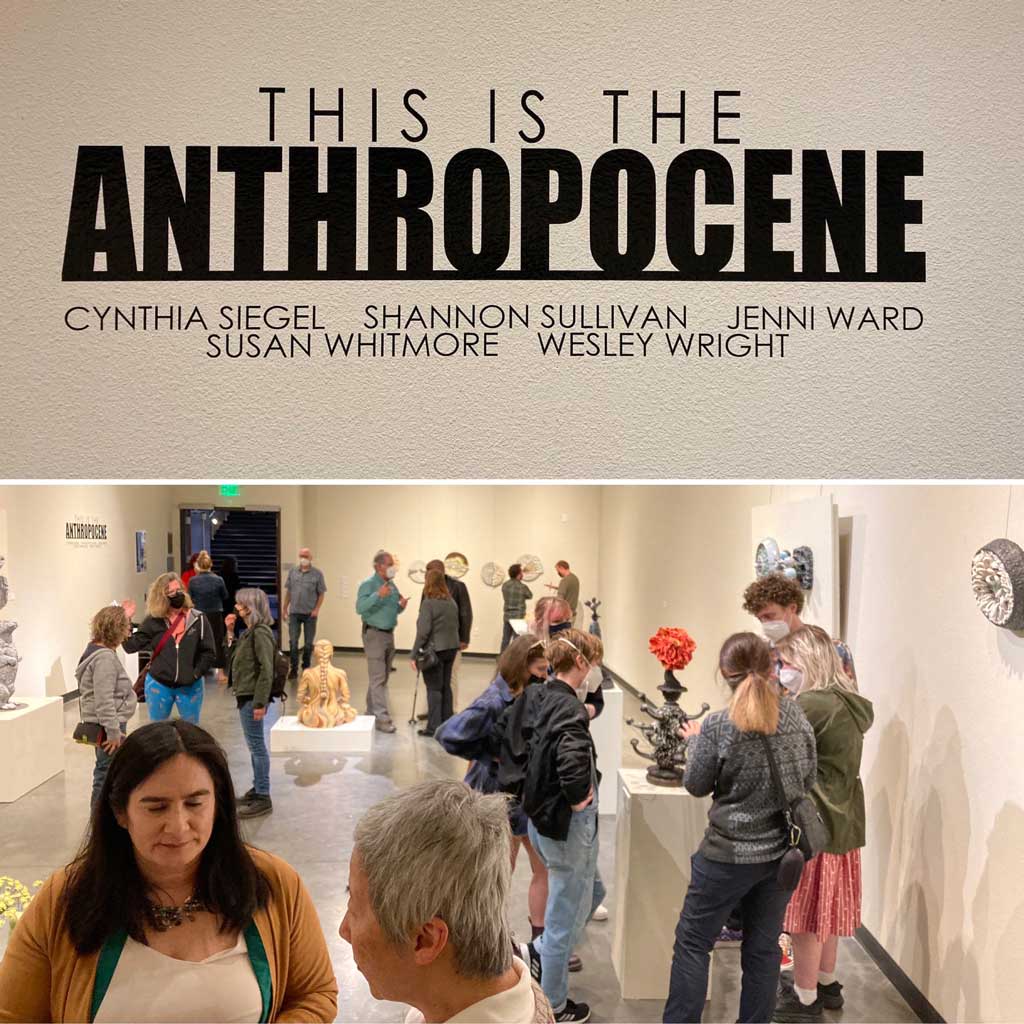
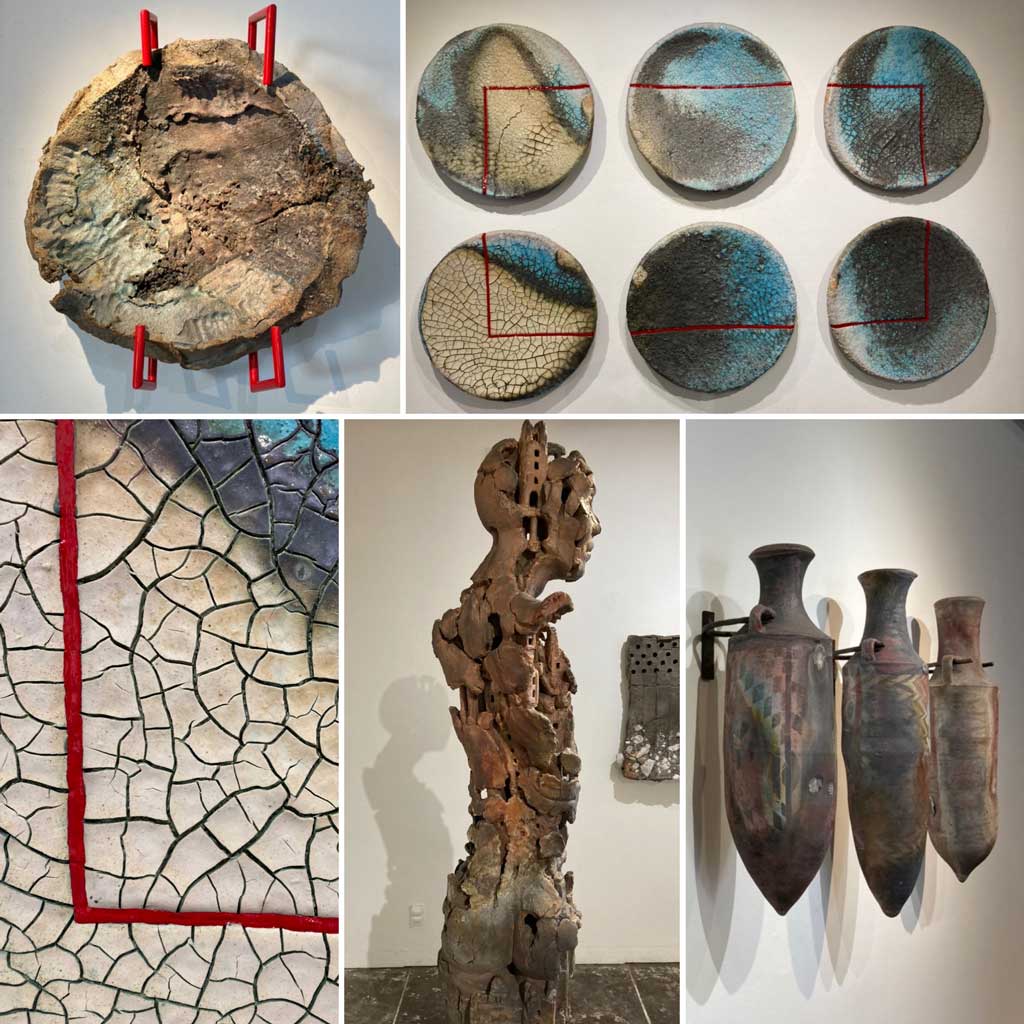
If you missed seeing this show in person, here’s your chance to check out the exhibit with a full gallery tour of This is the Anthropocene, which included works by Cynthia Siegel, Shannon Sullivan, Jenni Ward, Susan Whitmore & Wesley Wright. If you want to learn more about each of the artists work and the curator’s vision for the show, see below…
Curators Statement:
The Anthropocene is defined as the current geological age during which human activity has been the dominant influence on the climate and the environment. Curators Cynthia Siegel and Jenni Ward chose to bring together a diverse group of artists whose work has not been grouped together before to explore this concept. The five artists are responding within the themes of Animal, Agriculture, Landscape, Water and Atmosphere, from multiple viewpoints. Using their current bodies of work, the artists have challenged themselves to deepen their consideration of these relevant topics.
While diverse in style and approach, the artists find commonality in the medium of ceramics, with each artist’s inspiration from nature, and with their desire to use their work to bring awareness to the planet’s current state of peril.
For tens of thousands of years, humans have used the abundant earth resource, clay, to increase their chances of survival. From primitive vessels to applications within the high tech industry, clay has paralleled human development and advancement. This shared history makes ceramics a uniquely relevant medium of expression for this exhibition. Each artist uses this humble medium to reveal a unique point of view regarding the impact of the Anthropocene.
As a parallel to the human struggle for survival, Cynthia Siegel is drawn to the tenacity of the bristlecone pine trees that have endured for thousands of years, both because of and despite their fragile environment. With textured surfaces that reflect the intersection of time, weather, growth, and decay, Siegel’s sculptures convey the inseparability of man and nature.
Using aerial and microscopic imagery as a point of interpretive departure, Shannon Sullivan explores human intervention in the landscape. Patterns found in agricultural landscapes, shifting geologic boundaries, and migrating oceanic phenomena intermingle in her work.
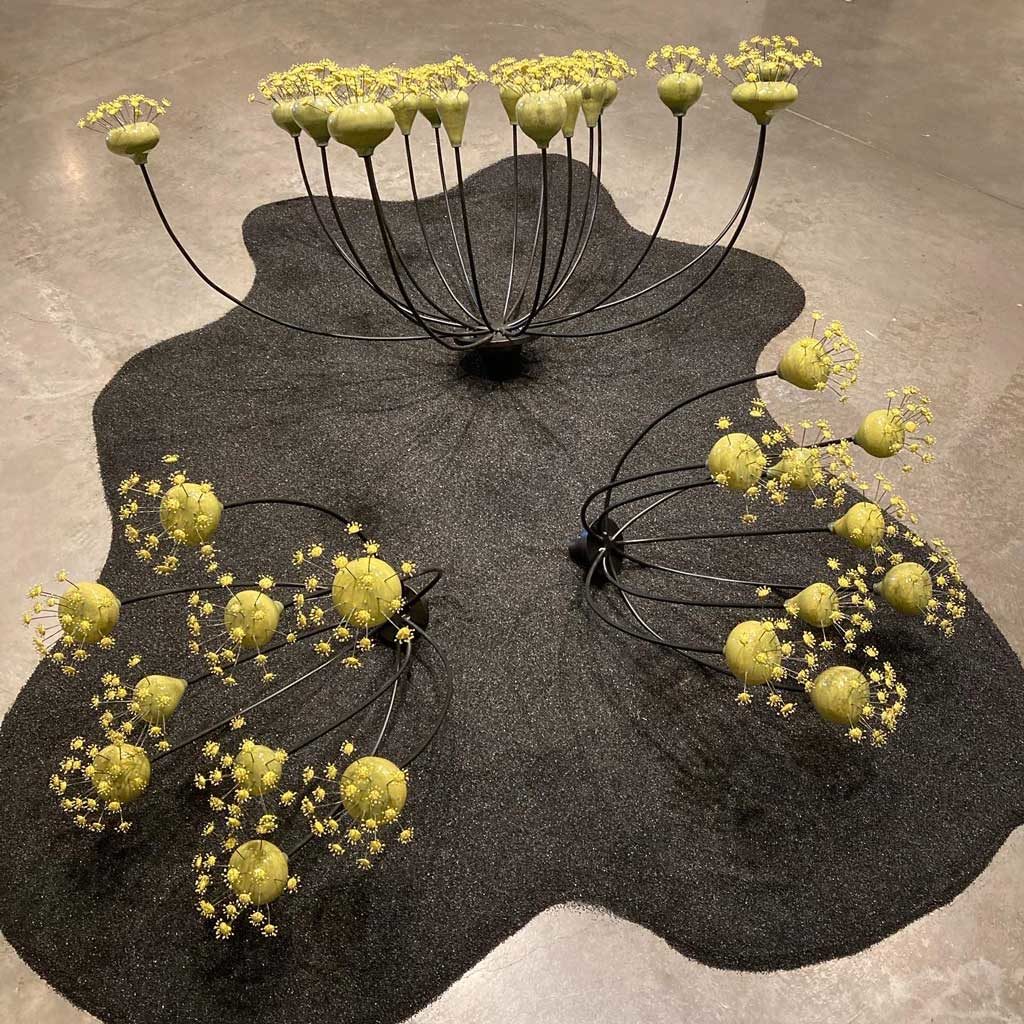
Through her abstract umbel flower installations, Jenni Ward’s work speaks about the disconnection that we have with nature, the unsustainability of monoculture farming, as well as the global issue of food insecurity.
Aspects of attraction and repulsion influence much of the work of Susan Whitmore, who regards light variations and magnifications, varied textures and colors, and the creatures that inhabit the depths, as inspirational and sometimes frightening. Whitmore explores how changing our actions will enable the planet to provide a hospitable existence for all species.
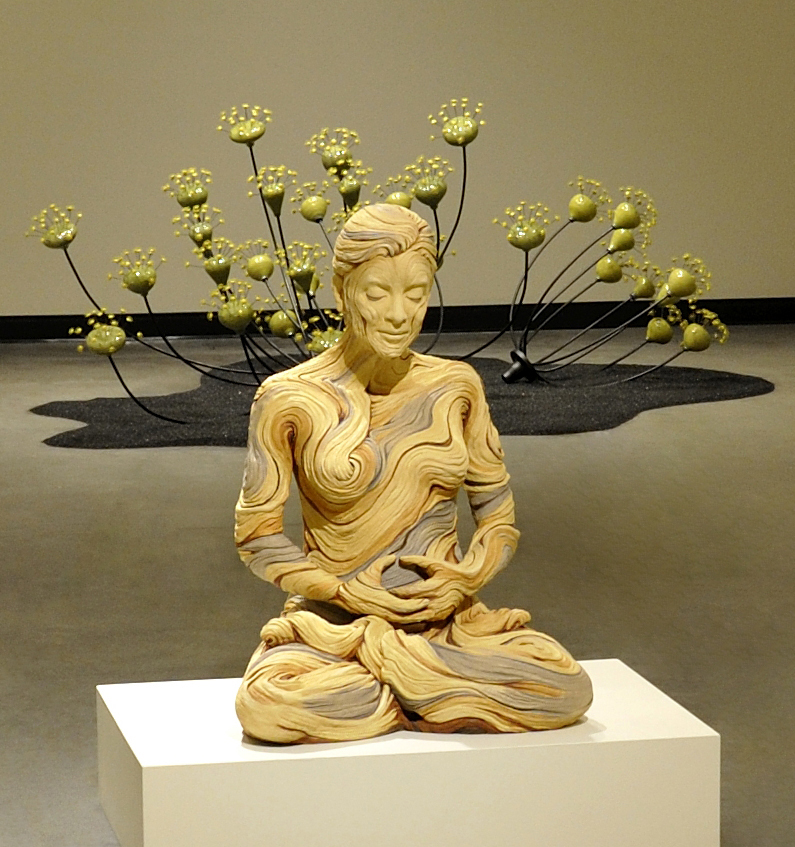
The ornate surfaces of Wesley Wright’s contemplative and noble animals respond to mass extinctions and recent losses of terrestrial and aquatic habitats, yet they also portray species interconnectedness and the hope for continued survival. Some of Wright’s sculptures hold an environment within a glass dome on its body, creating an alternate world of protection and safety.
Each of the artists included in This Is The Anthropocene has a keen interest in understanding and interpreting the inner workings and the wonder they find in their everyday life as a part of the natural world. Driven by personal experience, they have created works for contemplation and discussion, empowering the viewer to consider and even question their own relationship with nature and our changing planet.
Cynthia Siegel & Jenni Ward
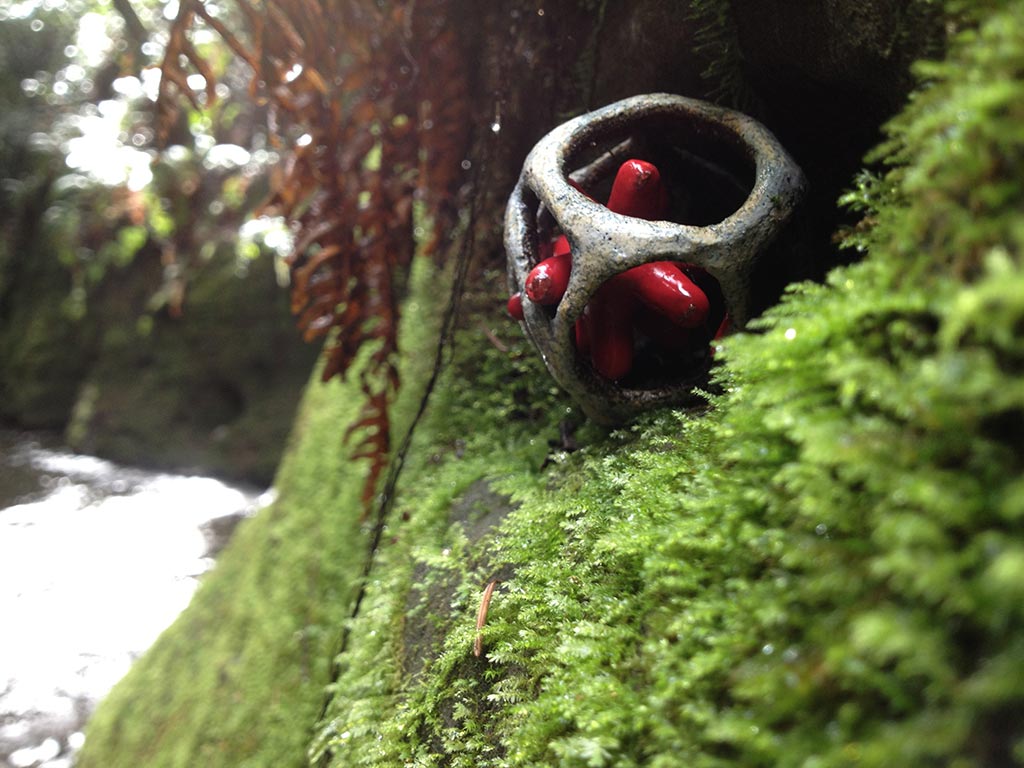
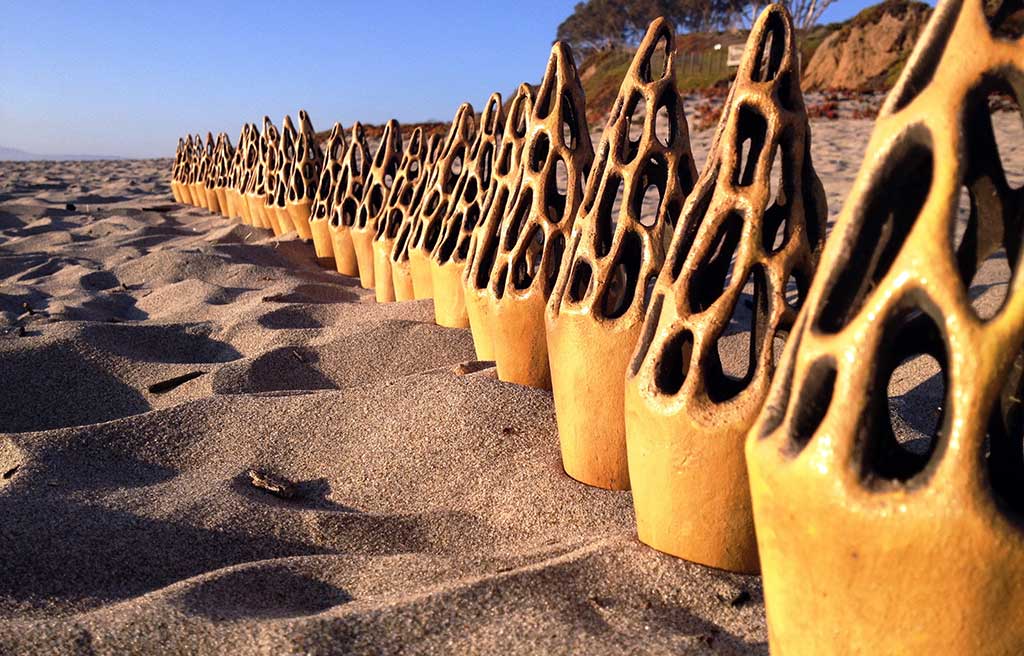
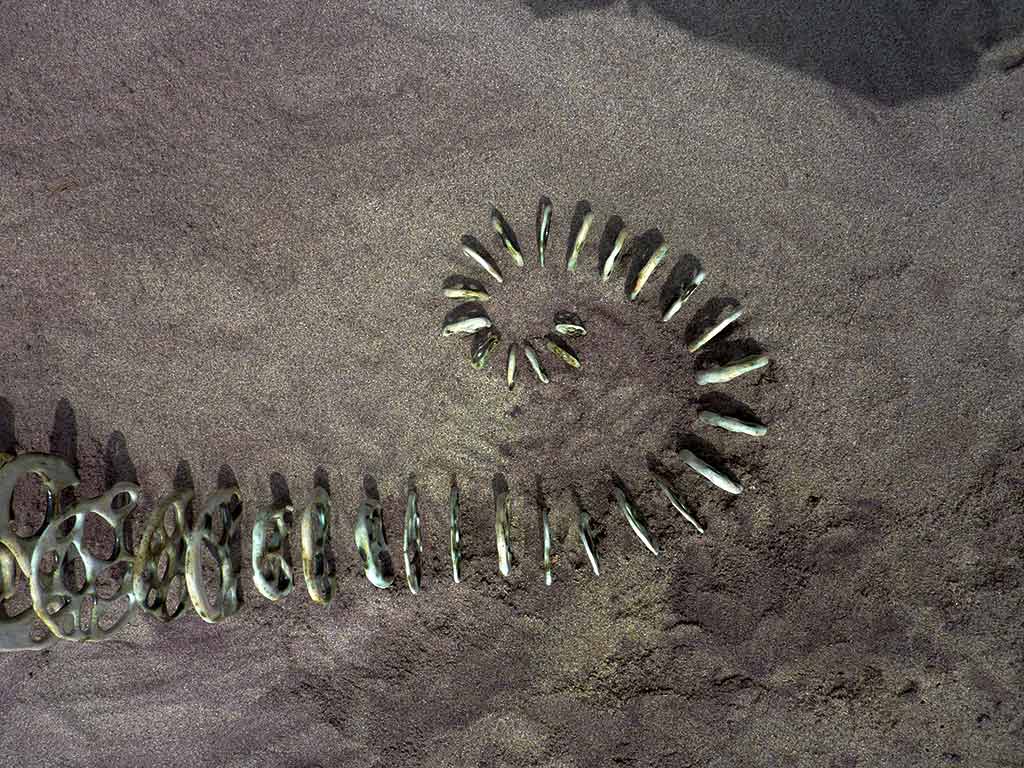
Recently reorganizing files led me to going through some vintage works and also made me realize that I’ve been taking my art out into nature for nearly ten years now. A sense of place and belonging to that place has become so much a part of the work and my installations, that I don’t think about the work without thinking about these places, even through the connections are as ephemeral as a shadow.
In the beginning there were experiments, some that were more successful than others. Some work didn’t connect with the space as well as others, it took some paying attention to the spaces and the work that was naturally coming out of the studio to find those connections. To figure out which pieces were more terrestrial and which more aquatic, but it felt that somehow the circle was complete by placing these pieces back where their original inspiration began, like returning the clay to the earth.
When I’ve encountered other people during the placement of these pieces, they always assume that I found the work growing or washed up or reveled somehow and wonder what anomaly of nature they are – so I guess they do look like they belong there. Below are some early images from the start of this process. If you want to check out some more images and newer ‘in the field’ installations, click here. There will be more to come in the future, I don’t see me stopping this part of my creative process any time soon… enjoy.
I’ve been quietly working away on these pieces in the studio over the past few months and just finished them up. I’m excited to announce that they have been placed with Aerena Galleries in Napa/Sonoma. It was a fun project to collaborate with them on, as they supplied the cloches and I designed the inner compositions with pieces from the Bone Series | Urchins and Medusas. They also have a bit of dried seaweed as part of the compositions, adding texture and color. I’m really pleased with the amount of movement and energy the pieces have despite their containment in the glass.
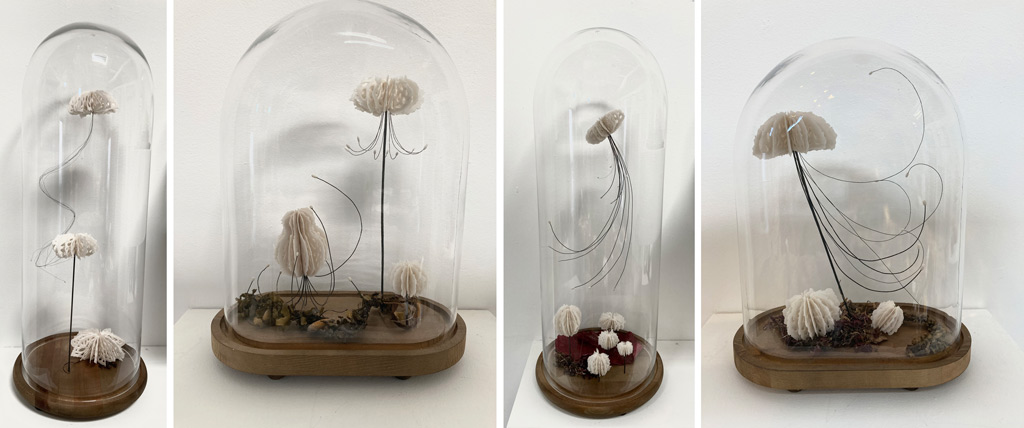
It will be interesting to see how they will display them in the gallery and even more interesting to see where these strange specimens end up!
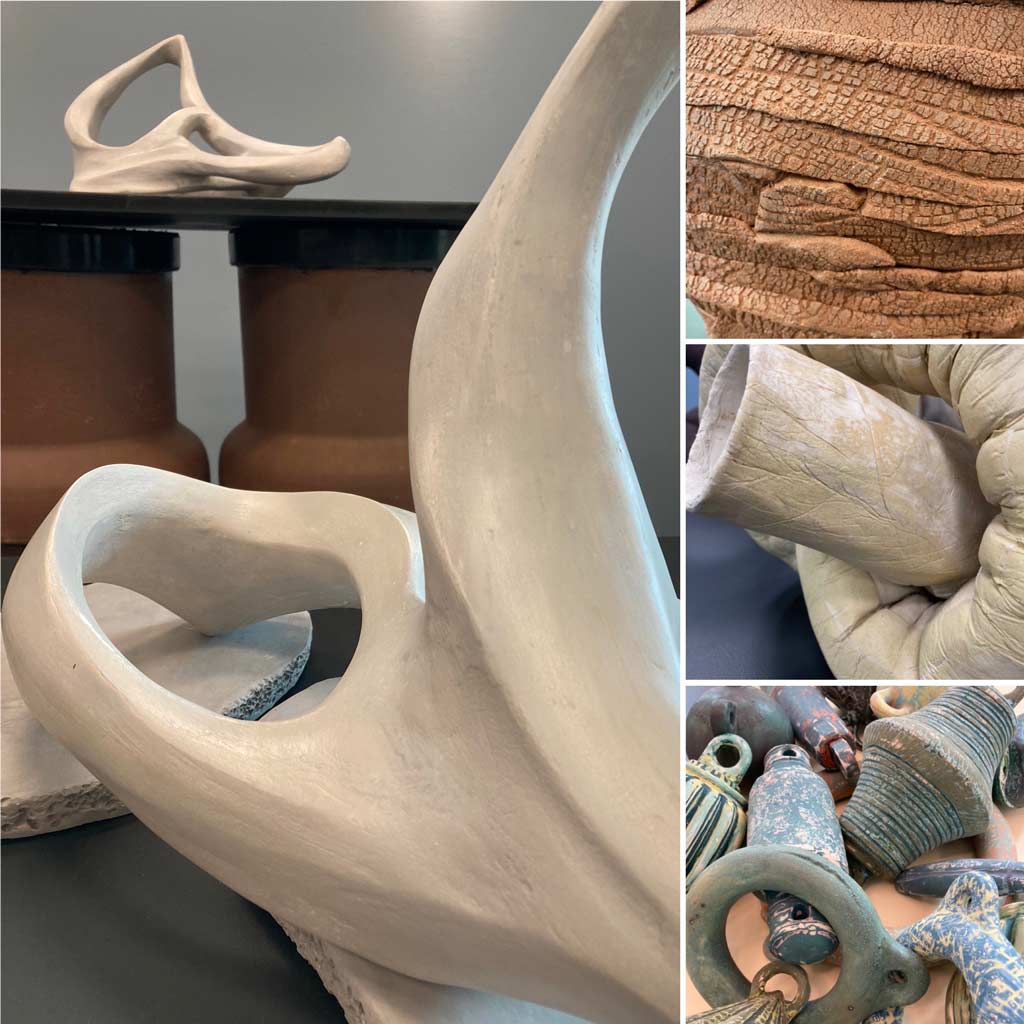
Three days and viewing almost 40 exhibitions is definitely pushing my limits of creative absorption but I’m honestly so amazed by the diversity of ways that artists use this humble medium of clay. From hand-built functional ware to high tech 3D printing, artists are really doing just about anything and everything with it and it’s so, so impressive.
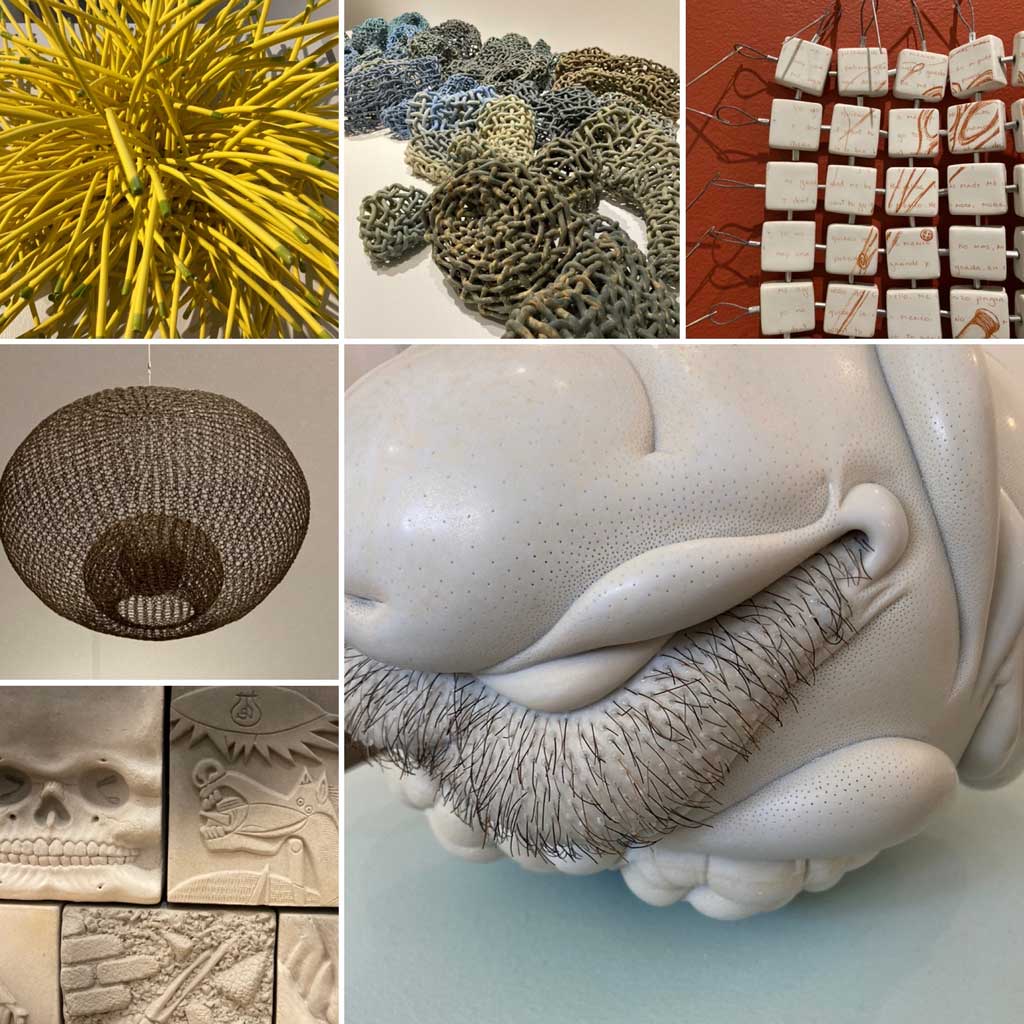
I ended my conference with a first time visit to the Crocker Museum which hosted the NCECA Annual Exhibition Belonging, and enjoyed the permanent collection on display. Their collection was vast and displayed beautifully…I loved seeing their collection of Stephen deStabler works since I took a workshop with him the year that I moved to California, and their Japanese ceramics collection was stunning as well. I also included one image below of a Ruth Asawa crocheted copper piece which is technically not clay but I love her work so much, I had to include it as one of the highlights of this art adventure.
And with way too much art swirling in my brain, that’s a wrap NCECA 2022…
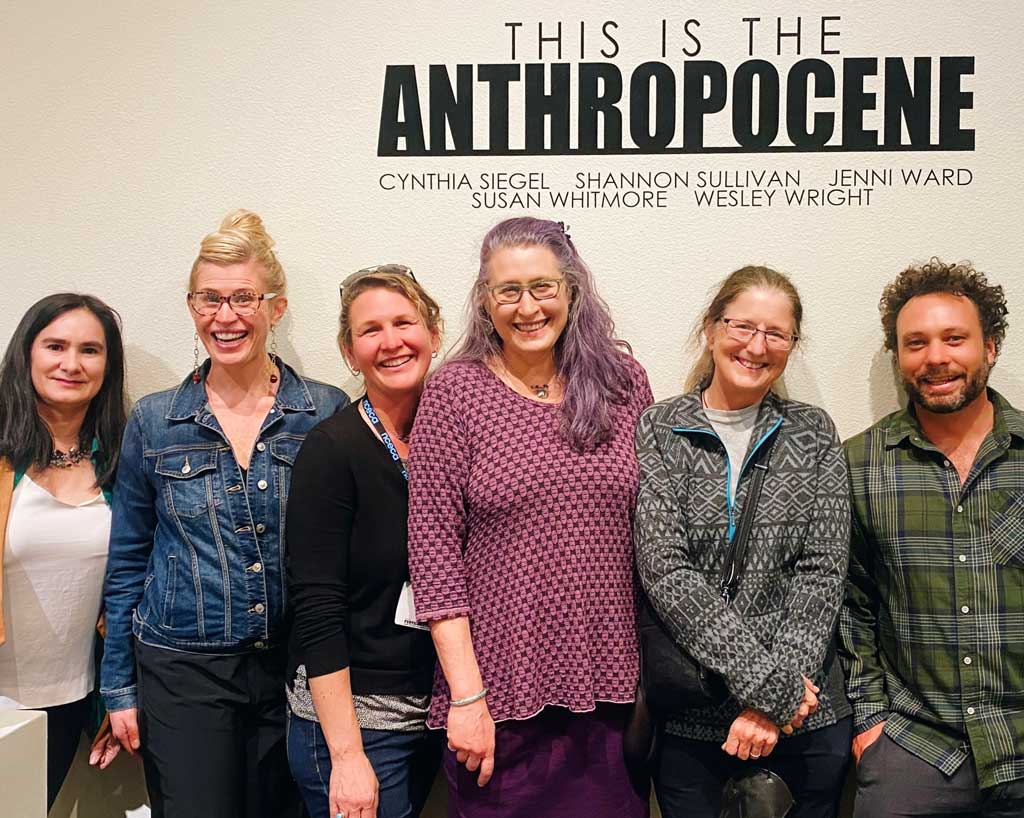
I spent half of today in the conference center watching a few lectures, the morning keynote speech and half the day walking around to exhibits that were close by downtown Sacramento. The keynote was a fascinating talk by Courtney M Leonard who discussed her relationship with her ancestral lands, the surrounding waters and how her ceramic works are responses to that relationship. I ended a very long day at our exhibit ‘This is the Anthropocene’ in Folsom with our artists reception. I really didn’t know if anyone was going to make it that far out of Sacramento to see our show, but we had a busy attendance all evening with lots of words of support and praise. Big thank yous to everyone who came out for our show!
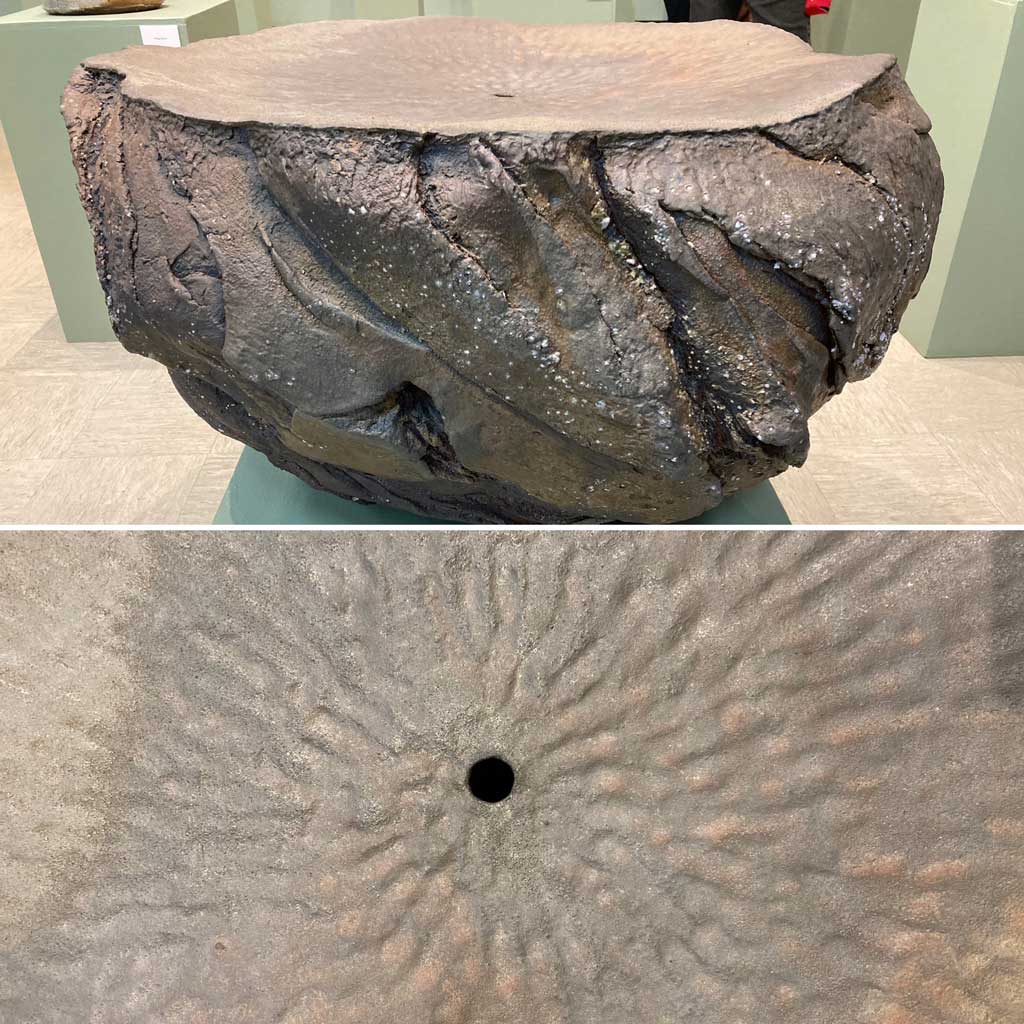
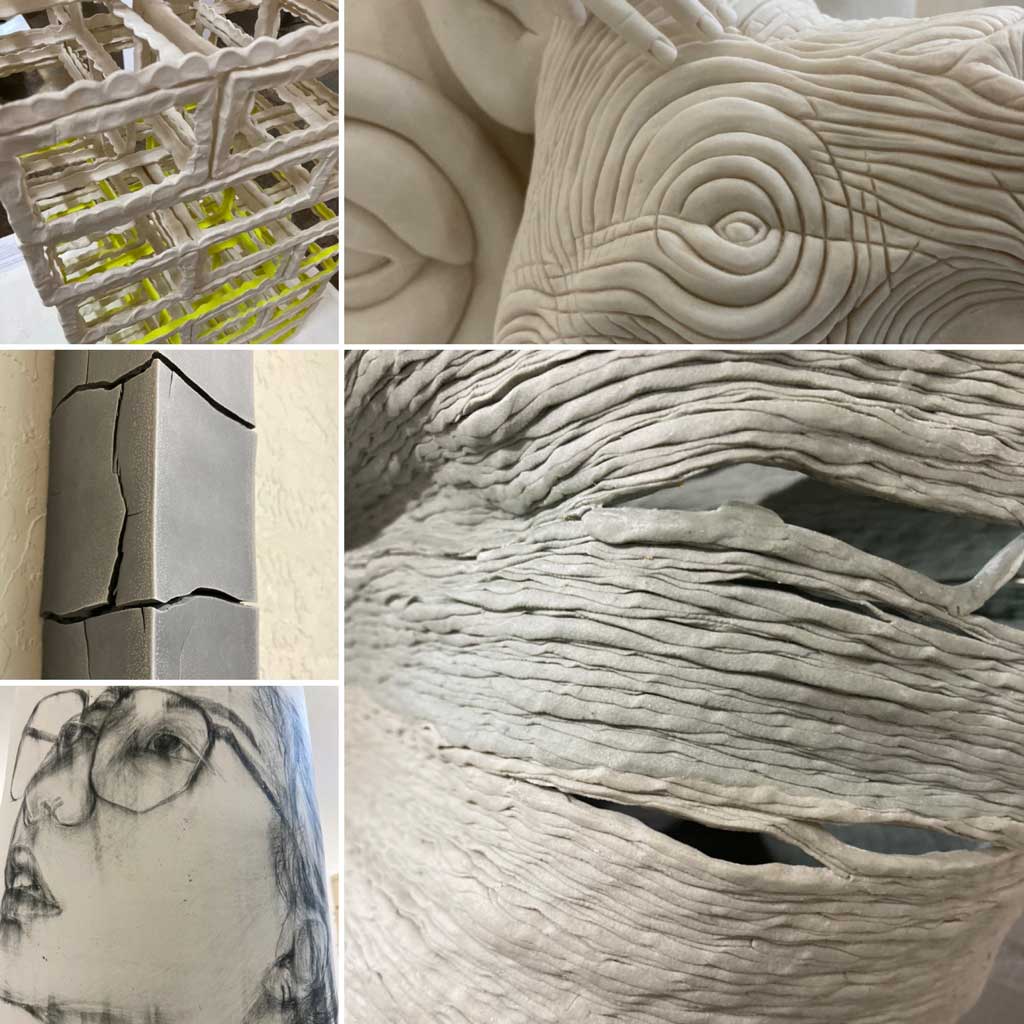
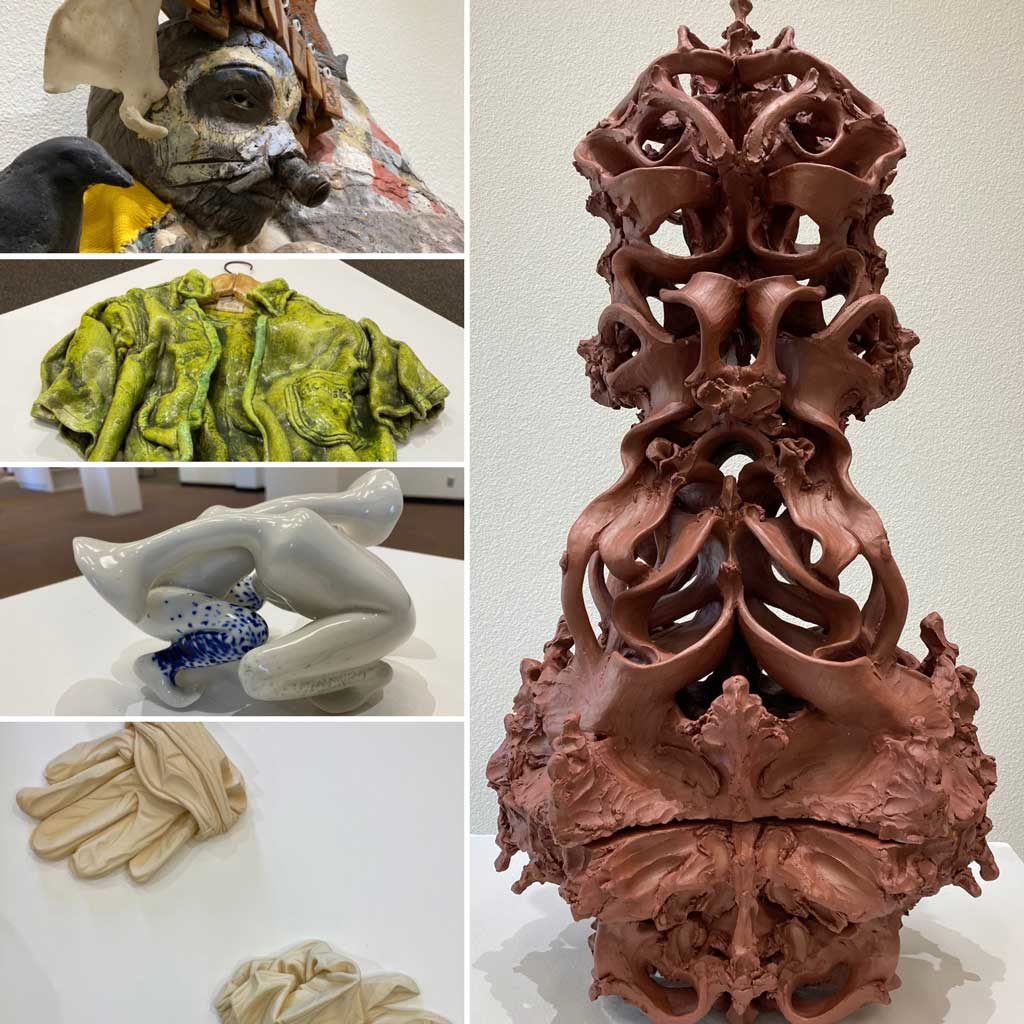
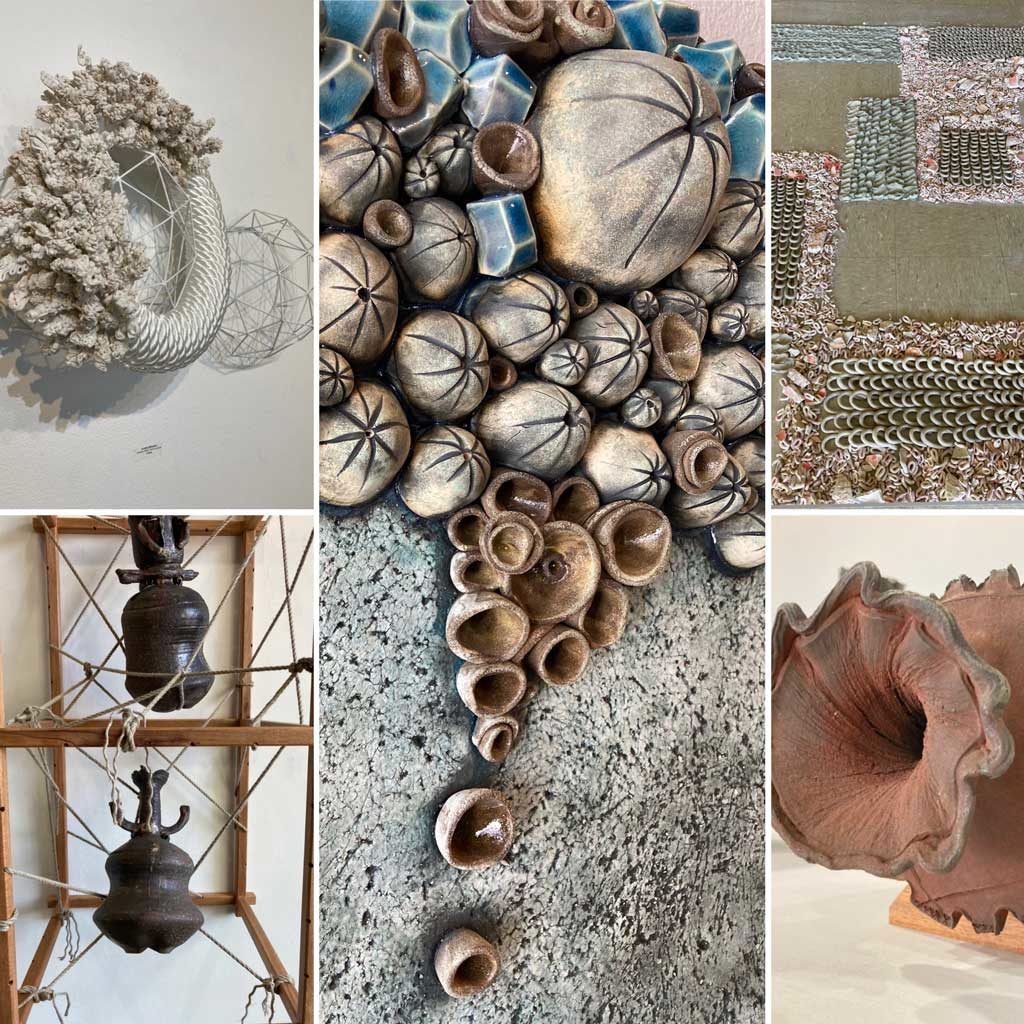
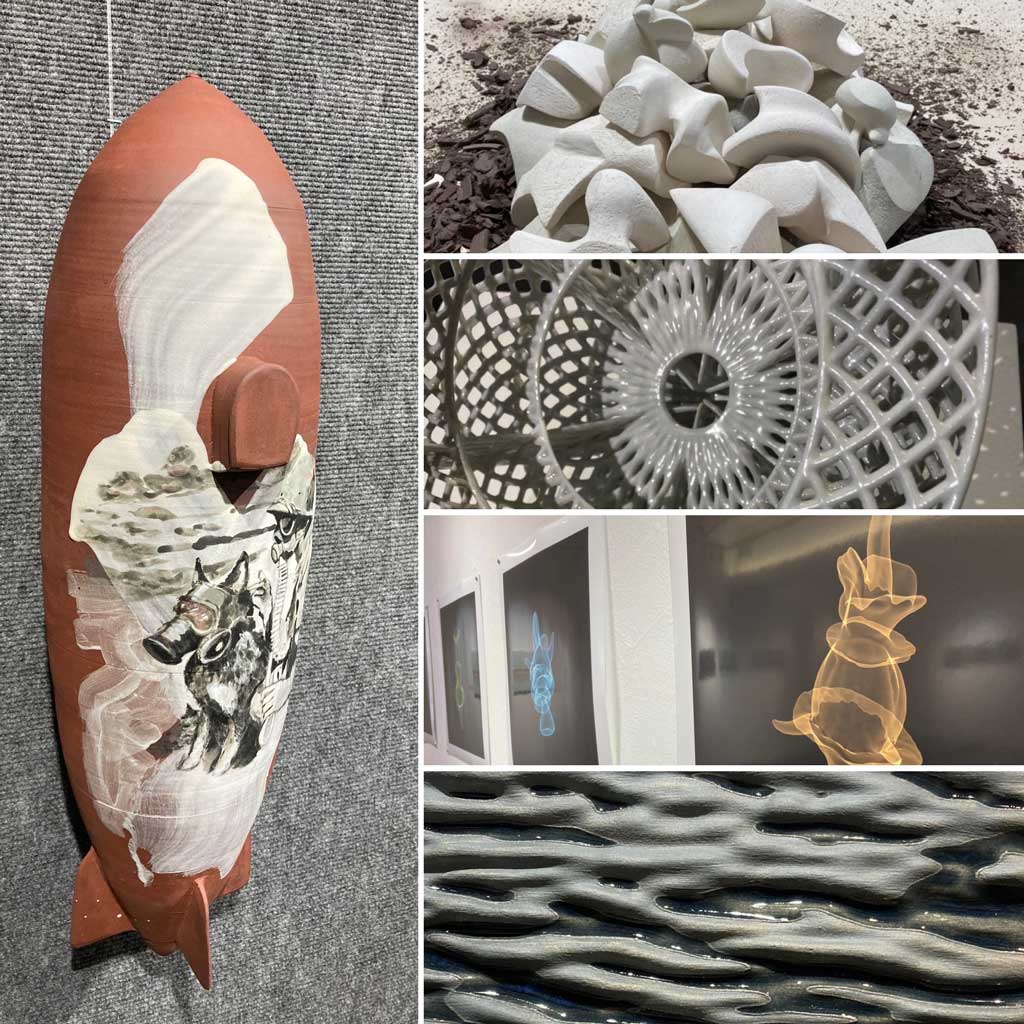
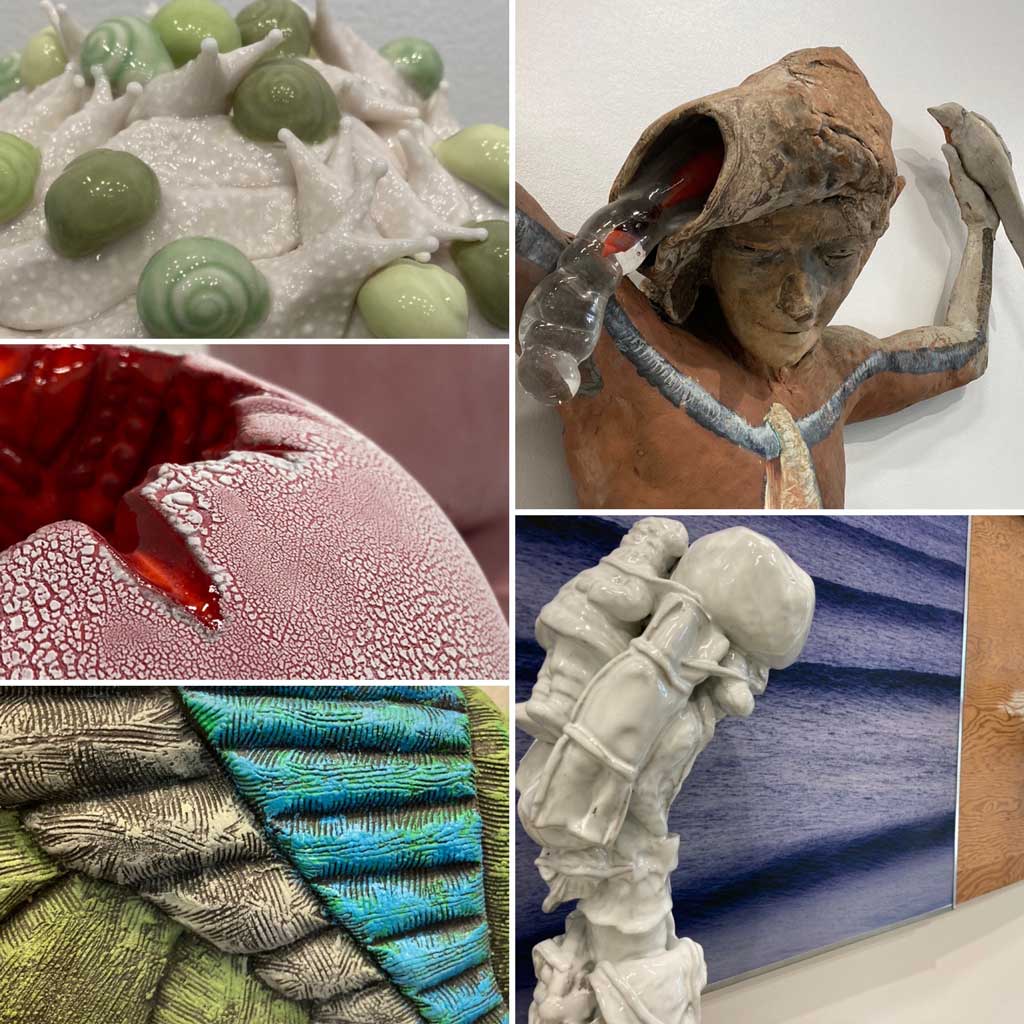
I spent the majority of the first day of the NCECA conference driving around to different exhibitions all around the Sacramento area. Below are images of some of the work that caught my eye, some is student work, some friends and colleagues and some is work by those in the top of their field – all of it is so impressive and diverse. I’m hoping to get to a number of more shows before the conference is over but there are literally dozens of shows to chose from, in the meantime, enjoy some of this eye-candy, more to come!

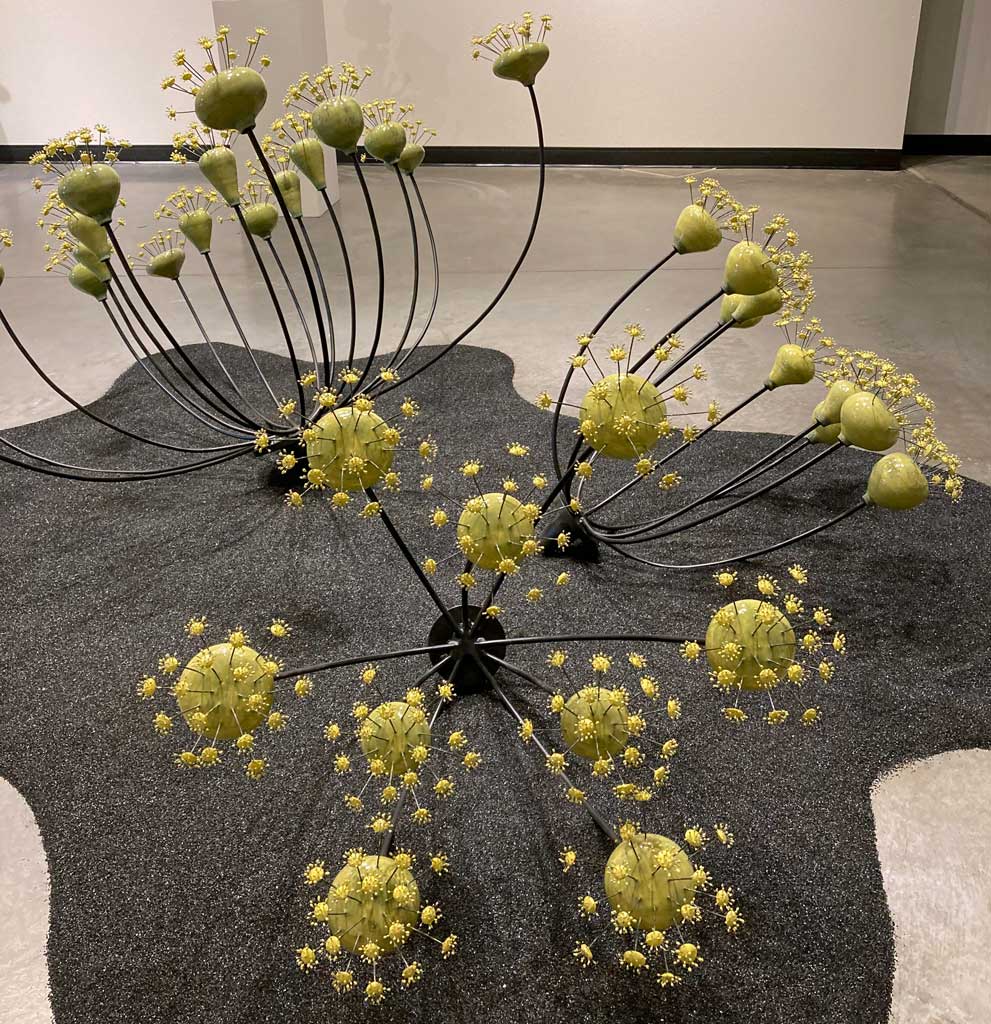
Excited to be attending this year’s NCECA conference in Sacramento. There’s a line up of great lectures, demos and of course ceramic exhibitions happening all over the area. I’m especially excited to attend the opening reception of the show I co-curated, This is the Anthropocene. My large scale Umbel flowers will be on display alongside the work of Cynthia Siegel, Shannon Sullivan, Susan Whitmore and Wesley Wright. Hope to see you at the reception!
Harris Center for the Arts – Bank of America Gallery | 10 College Parkway Folsom CA
February 11th – March 27th with a reception for the artists March 17th, 6:30 – 8:30
Looking for a way to help those in Ukraine directly? I was.
I then I realized that I follow a fellow ceramic artist on Instagram who is based in Kiev Ukraine. I literally watched their posts go from sustainable produced handmade pots to war posts overnight.
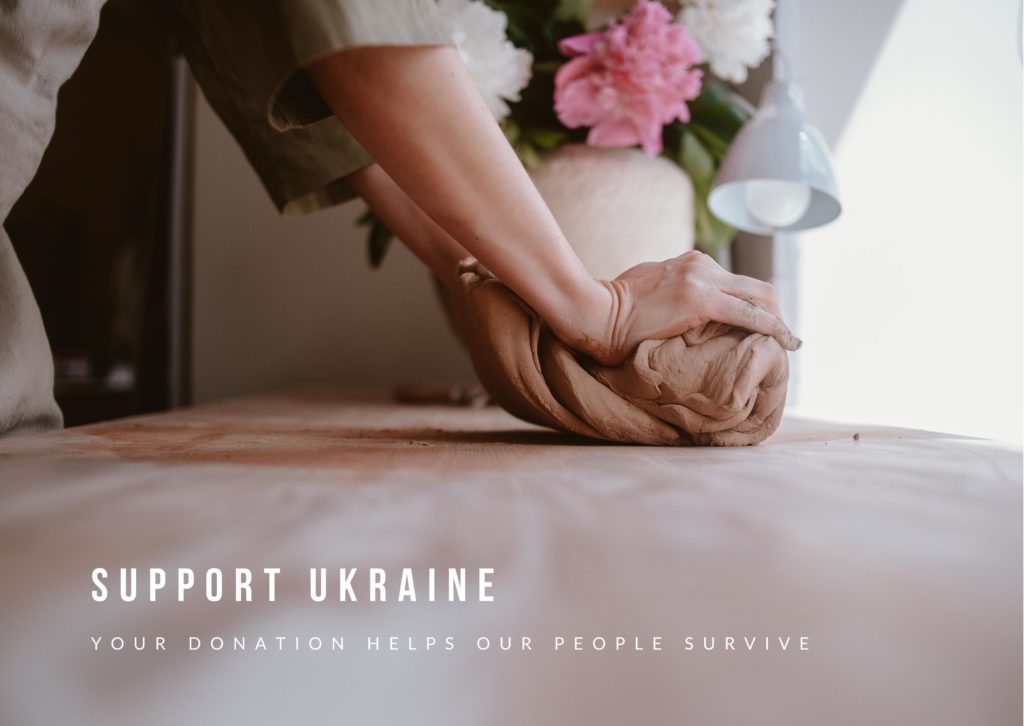
Studio potter Yuliya Makliuk is still in Kiev and has set up a number of ways that we can help support her and her community. One of the easiest is to buy a digital poster (like the one on the left here!) from her Etsy shop. She’s sending the money from these sales to local humanitarian organizations and the Ukrainian armed forces who are supporting those in the most dire situations.
To learn other ways to help: Here And Now Pottery
Here’s the monthly wrap up of everything going on at the studio…
Want to get the monthly email right in your inbox?
Join our safe subscribe monthly mailing list: